Lightweighting Simulation
Services India.
Witness heavy industrial components evolve into highly optimized lightweight designs. APJ 3D delivers cutting-edge Lightweighting Simulation Services India, advanced Topology Optimisation India, and proven Structural Optimisation Service India—removing unnecessary mass while strictly preserving structural integrity.
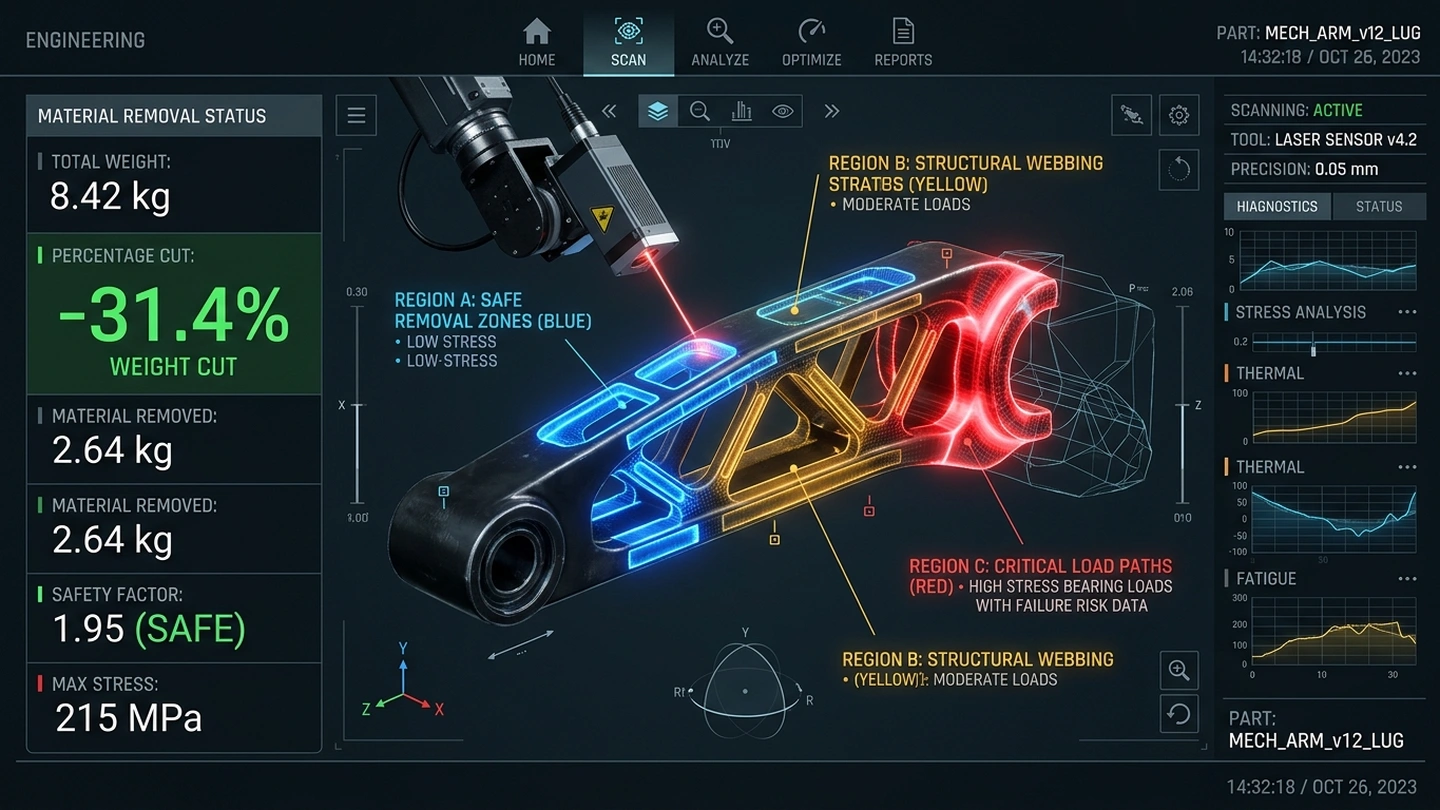
Interactive Weight Reduction Scanner
Interactive 3D scanning interface identifying safe material removal zones without sacrificing stiffness.
Region A: Non-Structural Flange
Driven by proven Weight Reduction Engineering Simulation and Lightweight Design FEA India.
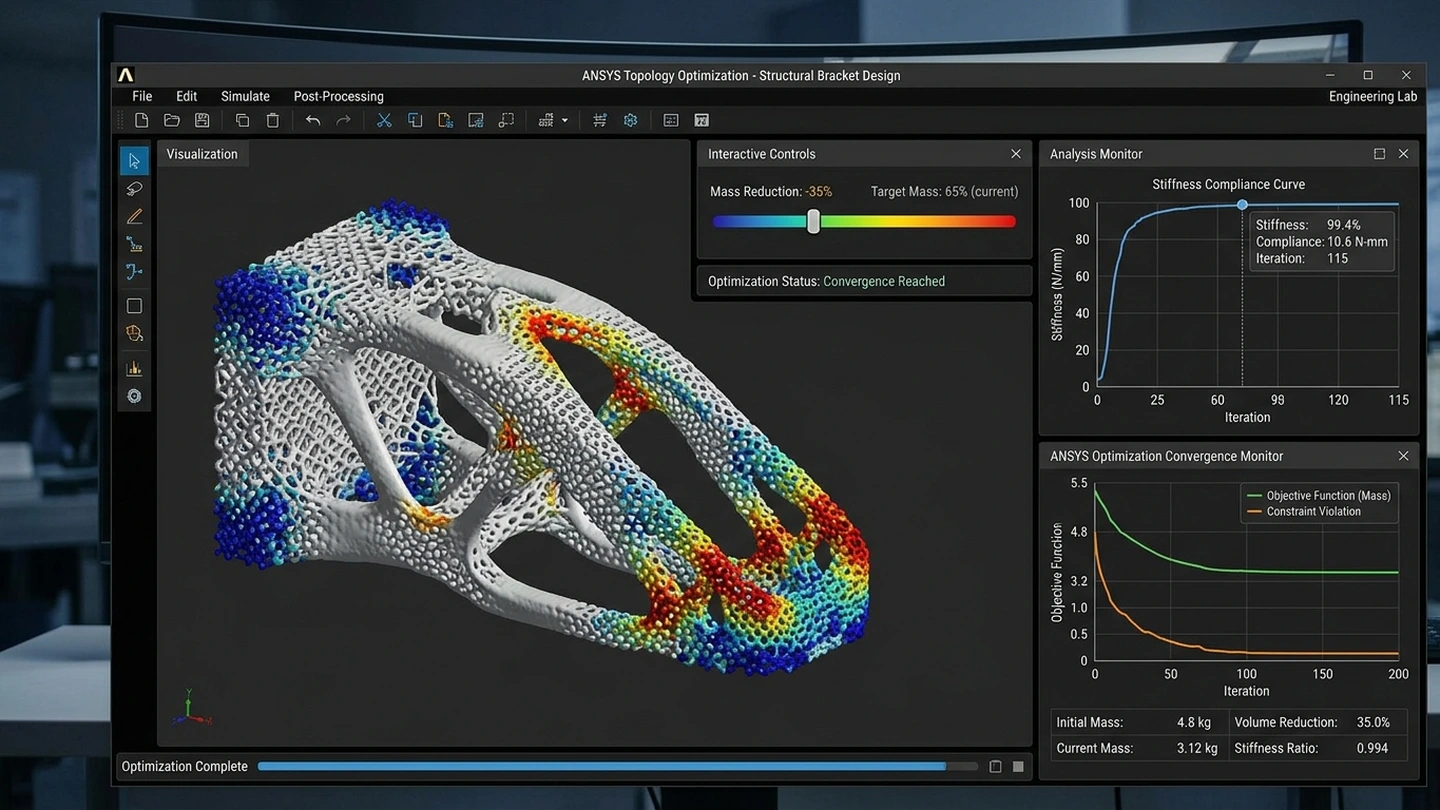
Topology Optimization AI Sandbox
Interactive optimization console evaluating density thresholds against manufacturing constraints.
Morphing Workflow Bridge
Floating glass engineering stages converting raw organic mesh output into toolable production CAD.
Design Space & Topology Result Extraction
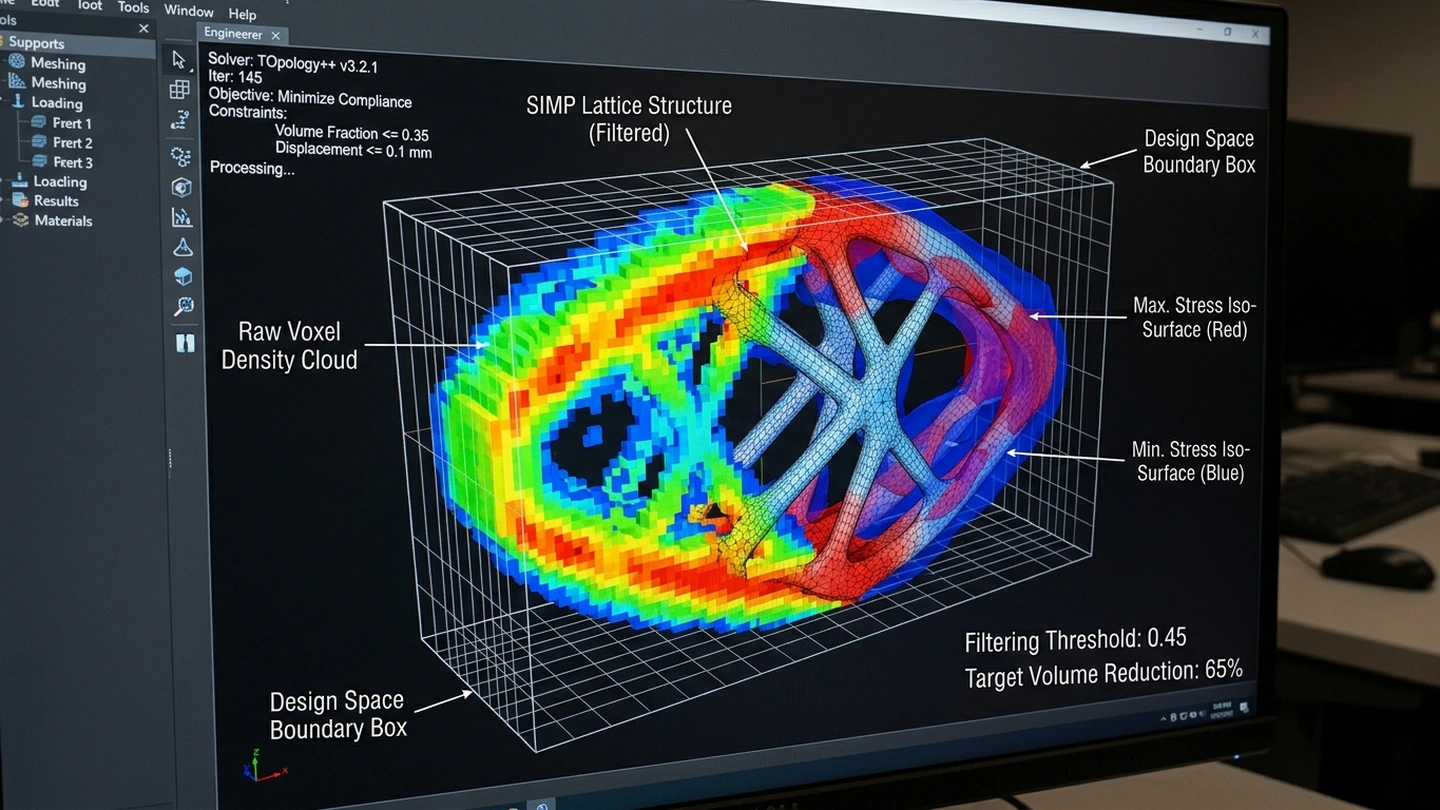
Parametric CAD Reconstruction & Sign-Off

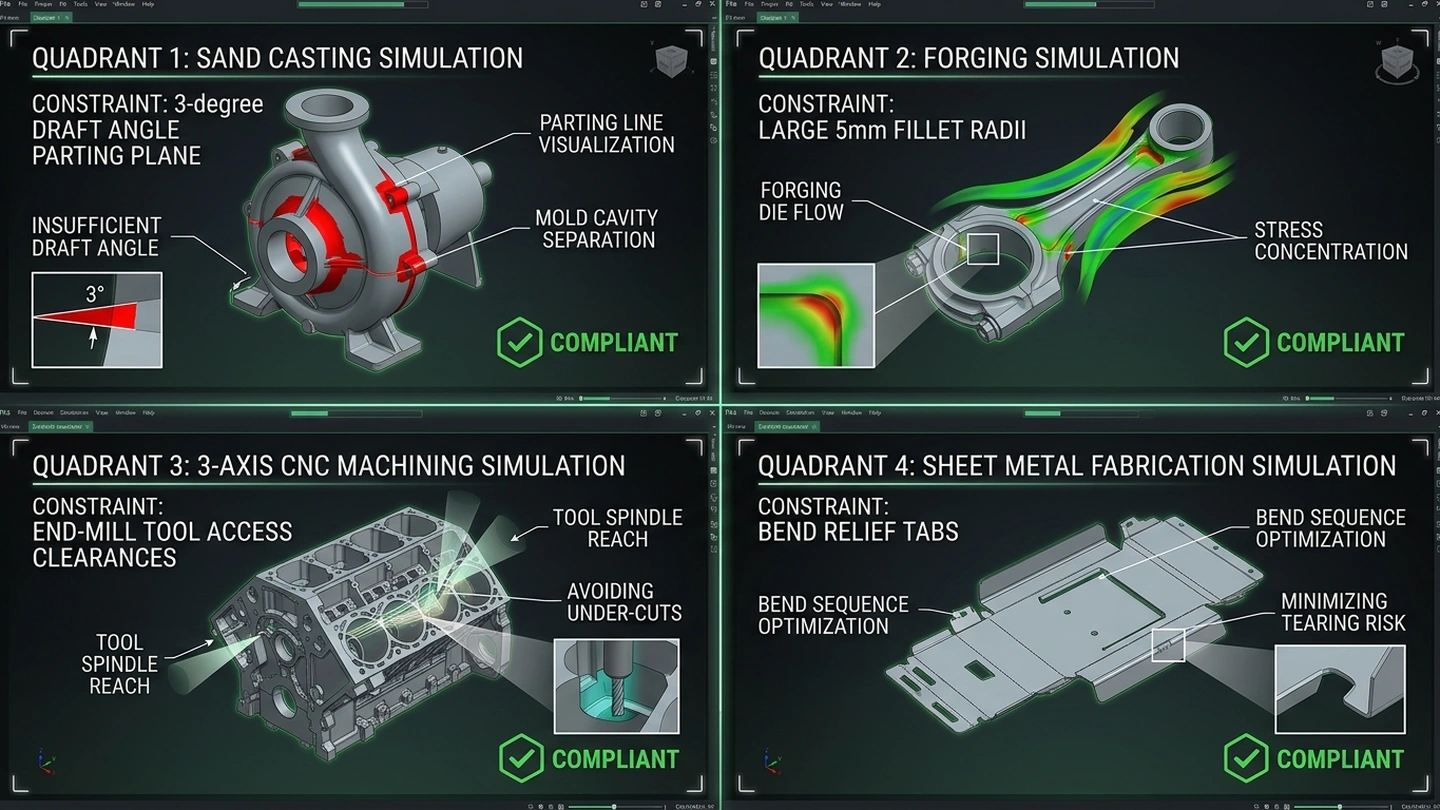
Interactive Manufacturing Switchboard
Control board adapting optimized geometries to strict casting, forging, machining, and fabrication rules.
Casting Constraints
Interactive Mass Reduction Ecosystem
Rotating industry sector rings delivering component weight reduction benchmarks.
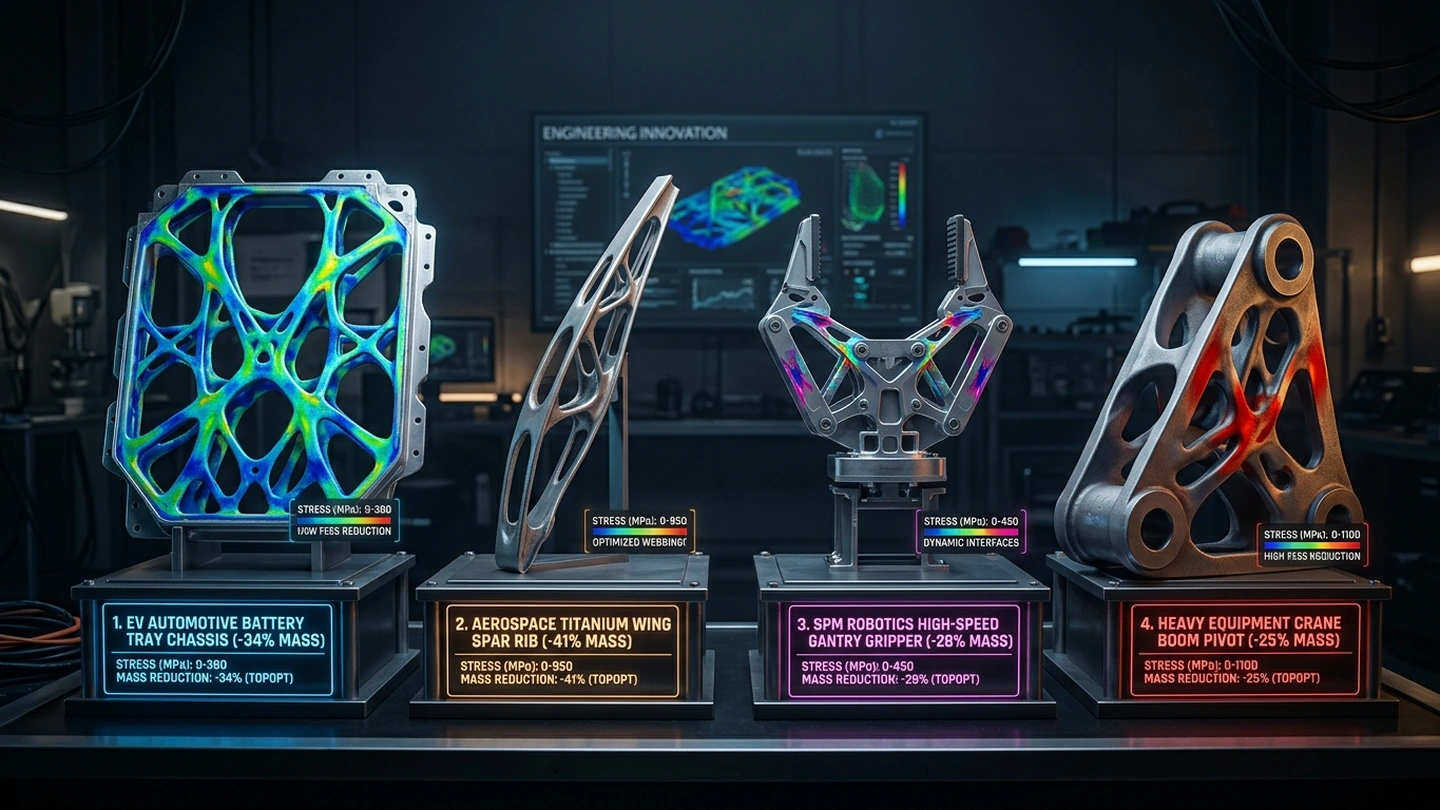
Engineering Before vs After Showcase
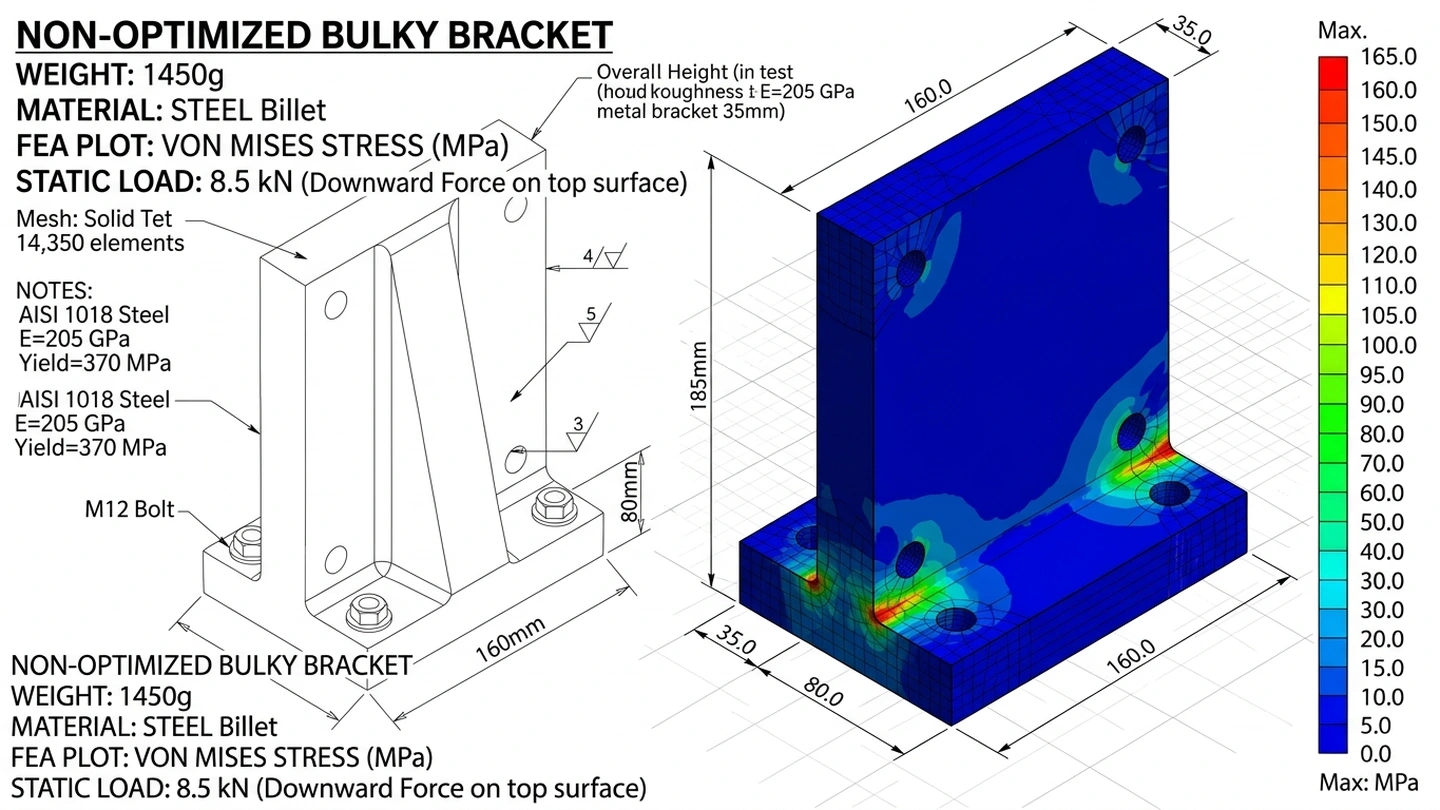
Comparing conventional heavy brackets against validated lightweight aerospace geometry.
Original Solid Billet Bracket
Weight: 1,450g (340g over engineering payload budget). Highly conservative solid webbing with underutilized material zones.
Optimized Aerospace Bracket
Weight: 1,000g (31% Weight Reduction). Toolable geometry ready for 5-axis CNC machining with verified 2.4x safety factor.

What is Lightweighting Simulation Services India?
CAE Simulation (FEA & CFD) is the numerical modeling of physical systems to predict structural stress, thermal dissipation, fluid flow, crashworthiness, and dynamic fatigue life under real-world operational loads.
When to Select This Service
Choose CAE simulation during early product development to virtually validate design integrity, optimize part weight, verify safety factors, and eliminate physical prototype failure risks before committing to production tooling.
Technical Capabilities & Verification Standards
Verified engineering parameters, hardware precision, and compliance benchmarks applied across all deliverables.
| Engineering Parameter | APJ 3D Capability & Precision Range | Compliance Standard / Verification |
|---|---|---|
| Simulation Disciplines | Linear/Non-Linear Structural FEA, Thermal Analysis, CFD Fluid Dynamics, Crash & Impact, Fatigue & Durability, NVH | ISO 9001 / NAFEMS Validated Procedures |
| Solvers & Software | ANSYS Mechanical, Abaqus, Altair HyperWorks/OptiStruct, Moldflow, OpenFOAM, LS-DYNA | High-Performance Computing (HPC) Clusters |
| Material Models | Elastic-Plastic metals, Hyperelastic rubbers, Composites, Viscoelastic polymers, Temperature-dependent curves | Tested Material Property Databases |
| Mould Flow Capabilities | Fill time, injection pressure, weld line prediction, sink marks, cooling circuit efficiency, volumetric shrinkage & warpage | Autodesk Moldflow Insight Validated |
| Deliverables | Comprehensive Engineering Reports, Von Mises Stress Plots, Factor of Safety (FoS) Maps, Deformation Animations, Optimization STEPs | Actionable Design Recommendation Summaries |
| Model Scale | From precision micromixers and plastic clips up to full vehicle chassis and industrial equipment weldments | Multi-Million Degree-of-Freedom Meshes |
| Turnaround Time | 3 to 7 business days for standard FEA/CFD studies; 24–48h for urgent gate location & fill checks | Dedicated Senior CAE Analysts |
Frequently Asked Questions
What information is required to start an FEA or CFD simulation?
What information is required to start an FEA or CFD simulation?
How do you validate the accuracy of simulation results?
How do you validate the accuracy of simulation results?
How can Moldflow simulation save tooling costs for plastic parts?
How can Moldflow simulation save tooling costs for plastic parts?
Can you optimize parts for lightweighting and material reduction?
Can you optimize parts for lightweighting and material reduction?
What is included in the final simulation report?
What is included in the final simulation report?
Reduce Weight Without Compromising Structural Performance
Deliver premier Lightweighting Simulation Services India and high-precision Topology Optimisation India. Eliminate dead weight with verified Structural Optimisation Service India.