Product Costing & Cost Engineering Services Predict Cost Before You Build
APJ 3D delivers expert Product Costing and Cost Engineering Services in India. Optimize your engineering decisions, understand cost impacts early, and ensure profitability before manufacturing begins.
What Is Product Costing & Cost Engineering?
Three connected disciplines that together tell you what a part should cost, before a single supplier quote comes in.
Should-Cost Analysis
An independent, first-principles estimate of what a part or assembly should cost to manufacture, built from material, geometry, and process data rather than a supplier's own quote. It gives procurement teams a fact-based benchmark for negotiation.
BOM & Teardown Costing
A bottom-up build of the bill of materials, line by line, using physical teardown or 3D scan data to allocate material, processing, and labor cost to every component and sub-assembly.
DFM Cost Engineering
Reviewing part geometry, tolerances, and manufacturing process choice for cost impact early in design, so avoidable machining, tooling, and scrap costs are eliminated before drawings are released.
Engineering Decisions Create Product Cost
Cost is not a finance problem. It is created by engineering decisions made long before production. Our product costing and cost engineering service India focuses on the root cause.
Material Selection
Aluminium vs Steel. The raw material choice dictates the baseline cost and subsequent processing needs.
Geometry Complexity
Complex undercuts require 5-axis CNC machining, drastically increasing cycle time and tool wear.
Manufacturing Process
Die casting vs forging. The selected process impacts tooling investment and per-part unit cost.
Tolerance & Finish
Tight tolerances and premium surface finishes exponentially drive up inspection and post-processing costs.
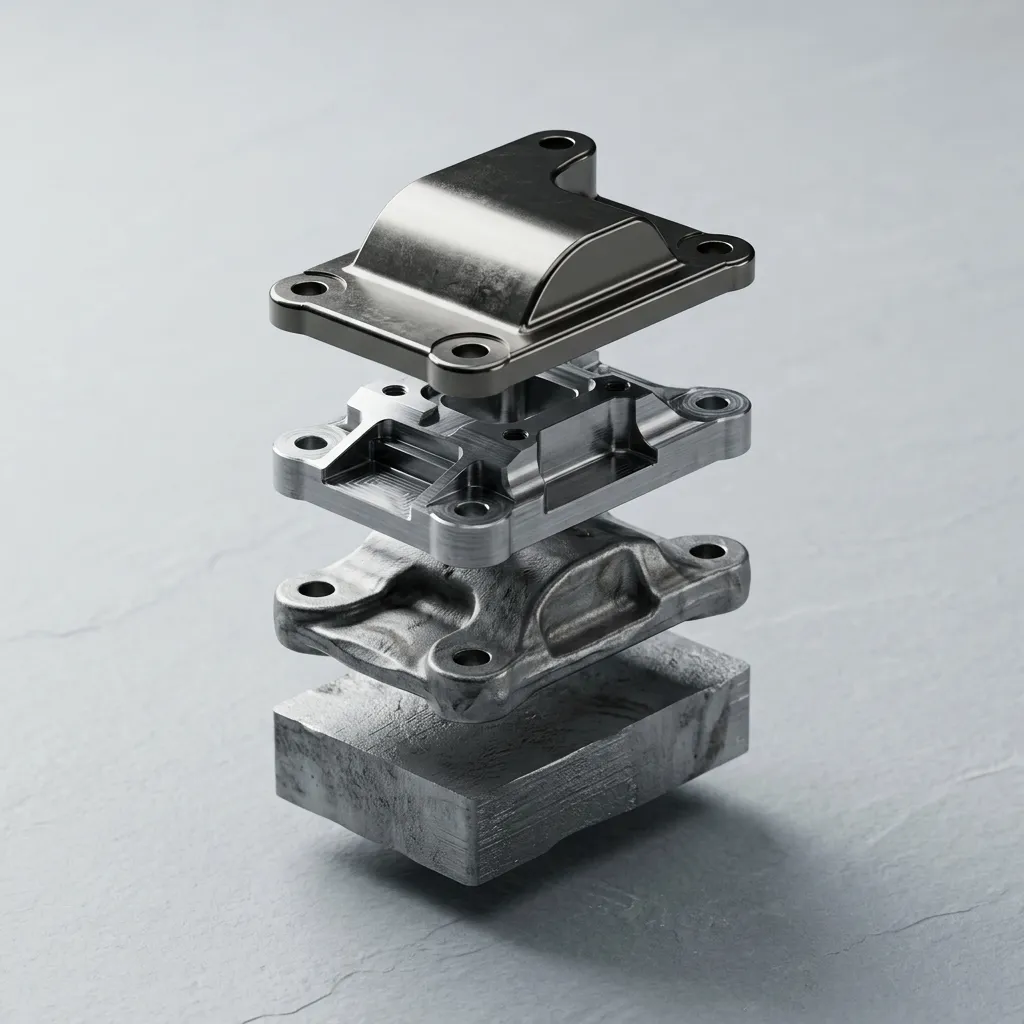
Material Selection & Alloy Grade
- ✓ Raw Material Alloy Grade, Density & Melt Loss Rate
- ✓ Processing Requirements: Extrusion vs Heat Treatment
- ✓ Scrappage & Recyclability Material Offset Analysis
Our Costing Expertise
Explore our core cost engineering methodologies tailored for precise manufacturing cost forecasting and purchasing negotiation.
BOM & Teardown Costing
Bottom-up assembly teardown & raw material allocation.
DFM Cost Optimization
Optimizing geometries for zero-waste production.
Should-Cost Modeling
Parametric models to challenge supplier quotes.
Tooling & Fixture Estimation
Predicting mold, die & fixture capital investments.
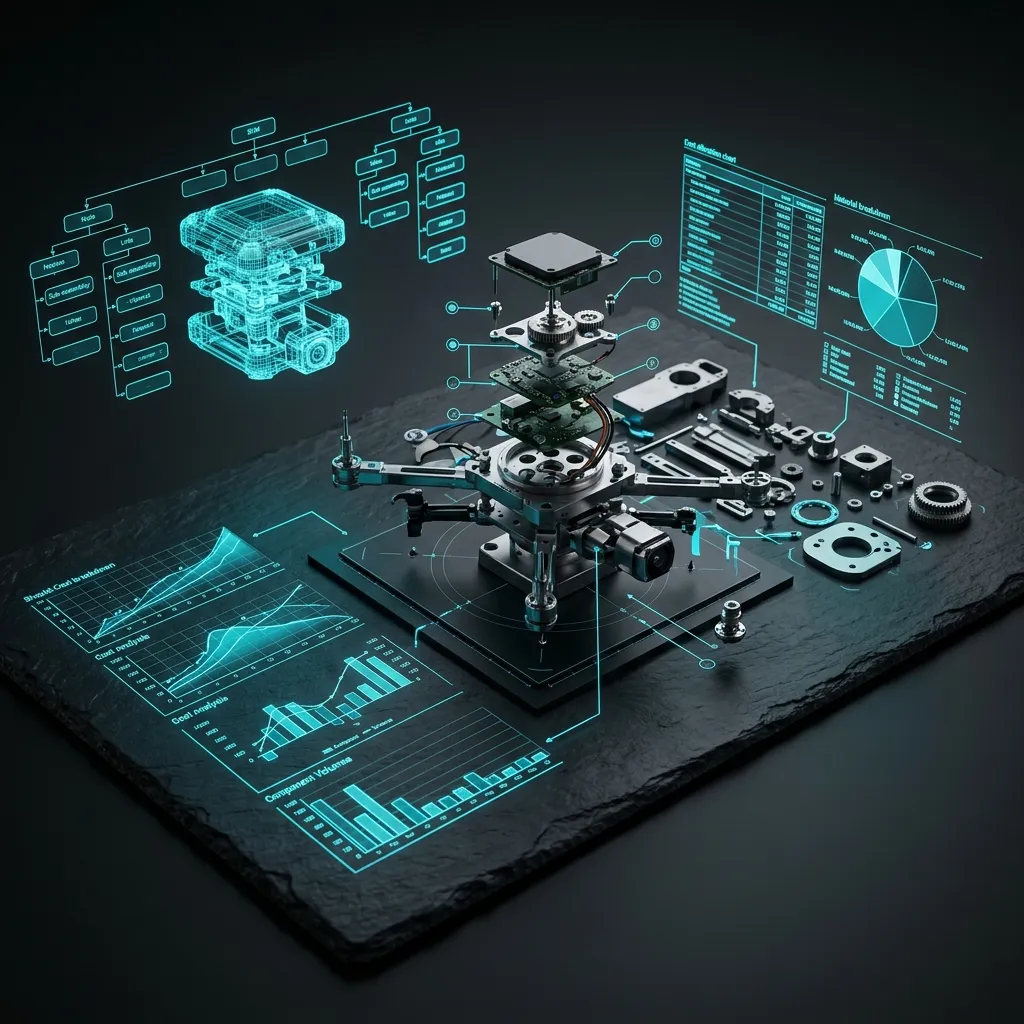
BOM & Assembly Teardown Costing
Bottom-up teardown cost estimation for full assemblies, sub-components, and raw material allocations across multi-tier supplier networks.
- ✓ Multi-Tier Sub-Assembly Teardown Analysis
- ✓ Fastener & Hardware Standardized Catalog Costing
- ✓ Raw Material Density & Yield Rate Optimization
Cost Intelligence Methodology
The four engineering decisions above are the cost drivers we quantify. This is the six-stage process we run to quantify them, from initial requirement to a validated, actionable report.
Cost Engineering Deliverables
Actionable intelligence delivered in comprehensive reports, designed for immediate supplier negotiation.
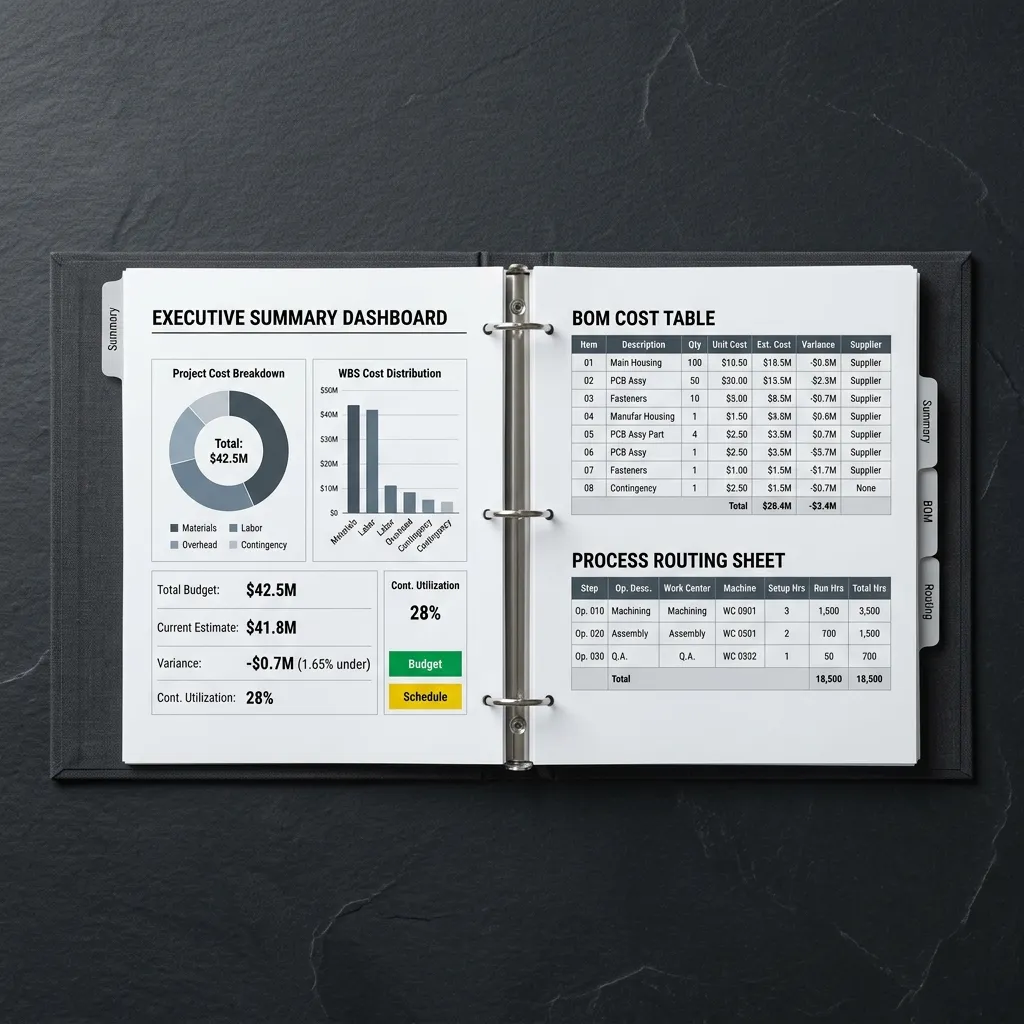
1 Executive Dashboard
High-level summary of total should-cost vs target cost, highlighting major cost drivers and immediate negotiation opportunities for procurement teams.
2 Granular BOM Costing
Line-by-line cost breakdown of every component, fastener, and sub-assembly, detailed with material, processing, tooling, and labor cost components.
3 Manufacturing Process Sheet
Step-by-step routing analysis detailing cycle times, machine hour rates, setup times, and assumed efficiencies for the selected manufacturing region.
4 Tooling & Investment Amortization
Detailed breakdown of mold/die costs, cavity count, lifespan assumptions, and per-part amortization impact based on annual production volumes.
Industries & Programme Support
Automotive
Typical Costing Programmes
- Vehicle teardown & benchmarking
- BIW tooling cost estimation
- Powertrain should-cost analysis
Related APJ Services
- Automotive Benchmarking
- Reverse Engineering
- FEA Simulation
Why APJ 3D vs Typical Estimation
Slide to see the difference between guessing cost and engineering it.
Typical Estimation
- Supplier Quotes (Biased)
- Guesswork & Rule of Thumb
- Excel-based Estimates
- Generic Material Assumptions
- No Physical Validation
APJ Intelligence
- Physical Teardowns
- 3D Scanning & Digitization
- Measured Geometry Data
- Manufacturing Process Analysis
- Parametric Should-Cost Models
Should-Cost Analysis vs Traditional Quoting
A traditional quote is a number a supplier hands you, built on their own assumptions and margin — you have no visibility into how it was calculated. A should-cost analysis builds that same number independently from material price, cycle time, and machine rate, so you can see exactly where a quote is fair and where it has room to move.
Traditional Quoting
- Single number from the supplier, no cost breakdown
- Includes hidden margin, inefficiency & risk buffer
- No way to verify against actual manufacturing cost
- Negotiation relies on volume leverage alone
Should-Cost Analysis
- Line-by-line material, process & labor cost build-up
- Modelled from first principles, independent of any supplier
- Cycle-time & machine-rate data your team can defend
- Negotiation backed by an engineered, fact-based target
A should-cost study is often paired with a granular BOM cost structuring exercise, or run as a dedicated should-cost analysis engagement on its own.
What is Product Costing & Cost Engineering Services in India?
Product Costing and Cost Engineering is the practice of quantifying material, process, tooling, and labor cost drivers early in development so engineering decisions can be optimized against a target cost before manufacturing begins.
When to Select This Service
Choose product costing and cost engineering when you need to understand the cost impact of design decisions early, predict cost before you build, and protect profitability before committing to production.
Technical Capabilities & Verification Standards
Verified engineering parameters, hardware precision, and compliance benchmarks applied across all deliverables.
| Engineering Parameter | APJ 3D Capability & Precision Range | Compliance Standard / Verification |
|---|---|---|
| Should-Cost Modelling | Independent first-principles modelling of material, processing, tooling, and labor cost rather than relying on supplier quotes | First-Principles Should-Cost Model |
| Geometry Data Capture | Part geometry captured via 3D scanning or teardown to confirm material, process, and quantity assumptions | Scan or Teardown-Based Data Capture |
| Process & Cycle-Time Modelling | Manufacturing process, cycle time, and machine rates modelled from first principles | First-Principles Cycle-Time Modelling |
| BOM Cost Breakdown | Granular line-by-line BOM cost breakdown assembling material, labor, tooling amortization, and overhead | Line-by-Line Cost Build-Up |
| Report Deliverables | Executive should-cost summary, BOM cost breakdown, manufacturing process sheet, and tooling amortization report | Supplier-Negotiation-Ready Reports |
| Engagement Timeline | Most single-component should-cost studies completed within a few weeks depending on part complexity | Complexity-Scaled Turnaround |
Frequently Asked Questions
Can you perform 3D scanning on-site at our manufacturing plant?
Can you perform 3D scanning on-site at our manufacturing plant?
How do 3D scanning and reverse engineering differ?
How do 3D scanning and reverse engineering differ?
What is a color deviation inspection map?
What is a color deviation inspection map?
Can dark, shiny, or transparent surfaces be scanned?
Can dark, shiny, or transparent surfaces be scanned?
What accuracy can we expect for automotive and aerospace components?
What accuracy can we expect for automotive and aerospace components?
Need to Know Your Product Cost Before Manufacturing?
From component teardowns to full assembly BOM costing — APJ 3D provides accurate Should-Cost Analysis and Cost Engineering Services across India.