Value Engineering & Cost Reduction Services
For Manufacturers in India.
Deliver definitive value engineering and cost reduction services that remove unnecessary cost while preserving functional excellence. Structured VAVE engineering consulting and precision should-cost modelling to eliminate over-engineering.
Where Does Product Cost Actually Come From?
Deploying rigorous value engineering and cost reduction services requires mapping exact cost drivers across functional subassemblies. Our interactive product value analysis isolates structural complexity to unlock significant engineering value.
Material Grade
Raw stock selection & scrap ratio
Geometry Profile
Machining depth & contour setup
Tolerance Bounds
Precision limits & grinding passes
Assembly Steps
Fastener count & assembly labor
Material Specification
Replace over-specified alloy steel with heat-treated micro-alloy grades to preserve yield strength while slashing material cost.

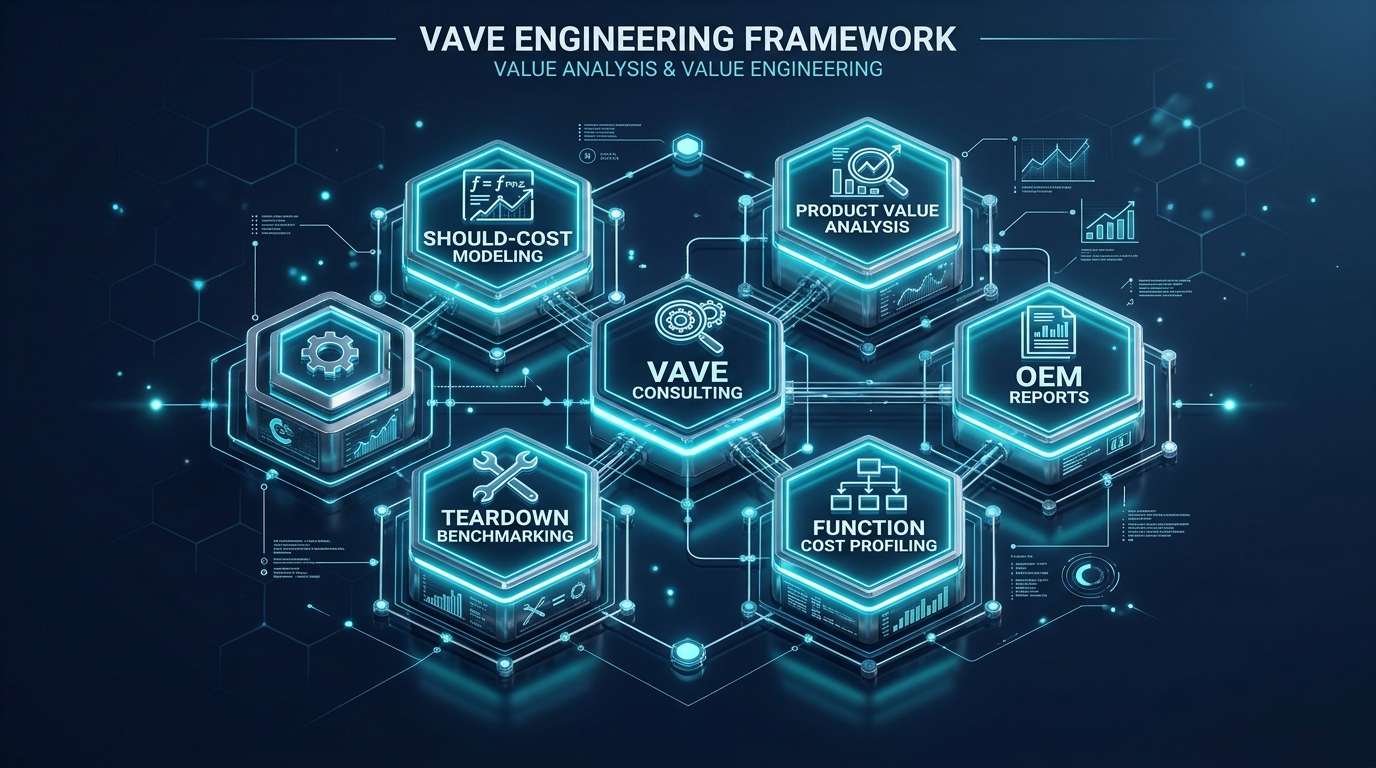
APJ VAVE Engineering Framework
Our hexagonal engineering methodology integrates rigorous VAVE engineering consulting with empirical should-cost modelling. We evaluate function-to-cost ratios to ensure every engineering modification delivers measurable manufacturing bottom-line impact.
VAVE Engineering Consulting
Systematic function-first analysis that decouples product performance from conventional manufacturing traditions, revealing immediate structural savings.
Product Value Analysis
Empirical component function review mapping primary secondary and redundant features against direct procurement cost allocations.
Should-Cost Modelling
Bottom-up engineering cost build-up calculating exact material overhead labor cycle time and machine hour rates across Indian supply chains.
DFM Cost Analysis
Design simplification targeting tool draft angles parting line optimization and elimination of secondary machining operations.
Teardown Benchmarking
Physical physical product dissection and competitive intelligence revealing how industry leaders optimize component geometry and weight.
Production Ready OEM Reports
Empirically backed technical dossiers ready for immediate sign-off by engineering design heads and manufacturing procurement leaders.
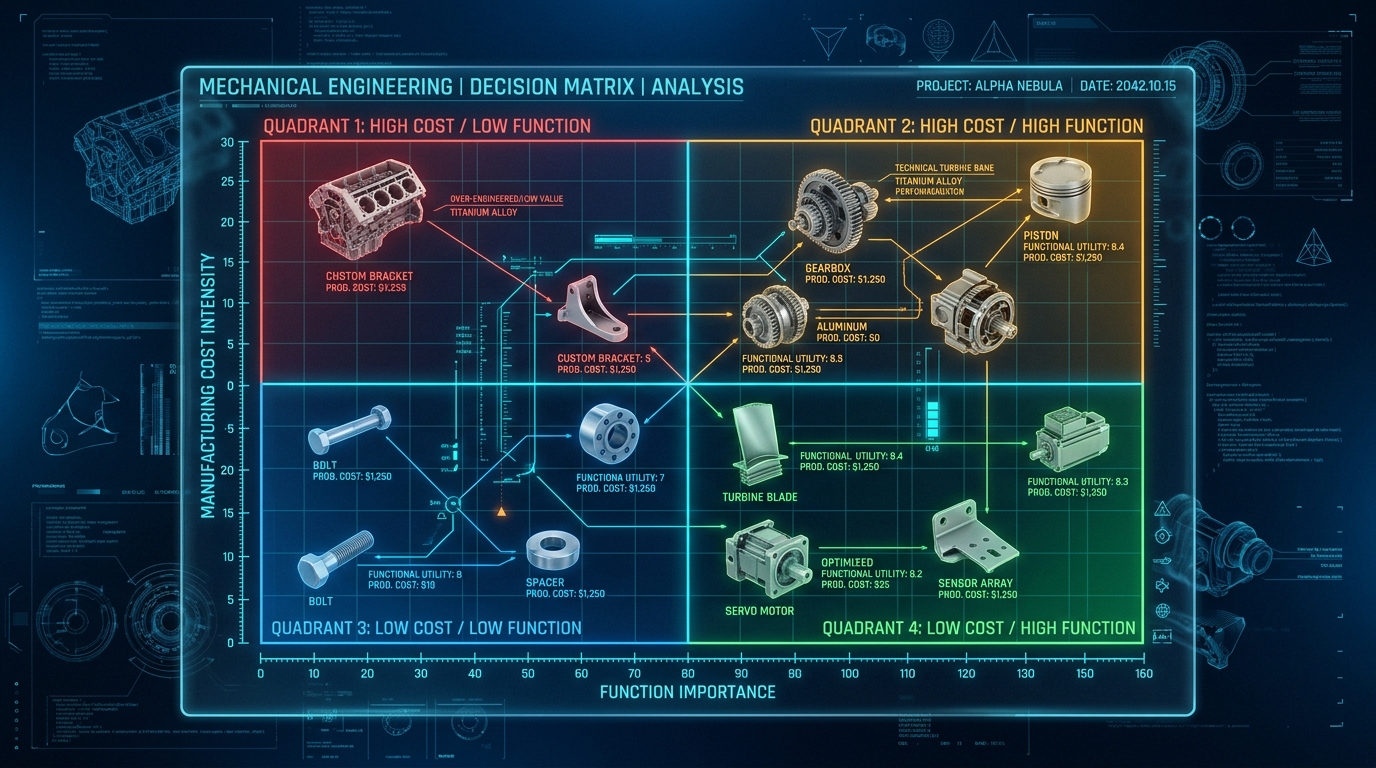
Interactive Function vs Cost Matrix
Explore our engineering quadrant matrix below. By plotting component function importance against manufacturing cost intensity, our VAVE engineering consulting team rapidly isolates candidates for consolidation or elimination.
Over-Engineered CNC Bracket
Action: ELIMINATE OR CONVERT. High 5-axis machining cost supporting minimal static load. Convert to high-strength stamped sheet metal assembly.
Main Hydraulic Housing
Action: OPTIMISE PROCESS. Critical pressure containment function. Redesign internal coring to reduce raw casting weight by 22%.
Retaining Fastener Sub-Pack
Action: STANDARDISE. Multiple custom screw sizes causing assembly friction. Standardize to common ISO fastener hardware.
Precision Sealing Gasket
Action: RETAIN & VALIDATE. Highly efficient design providing vital environmental sealing at minimal material cost.
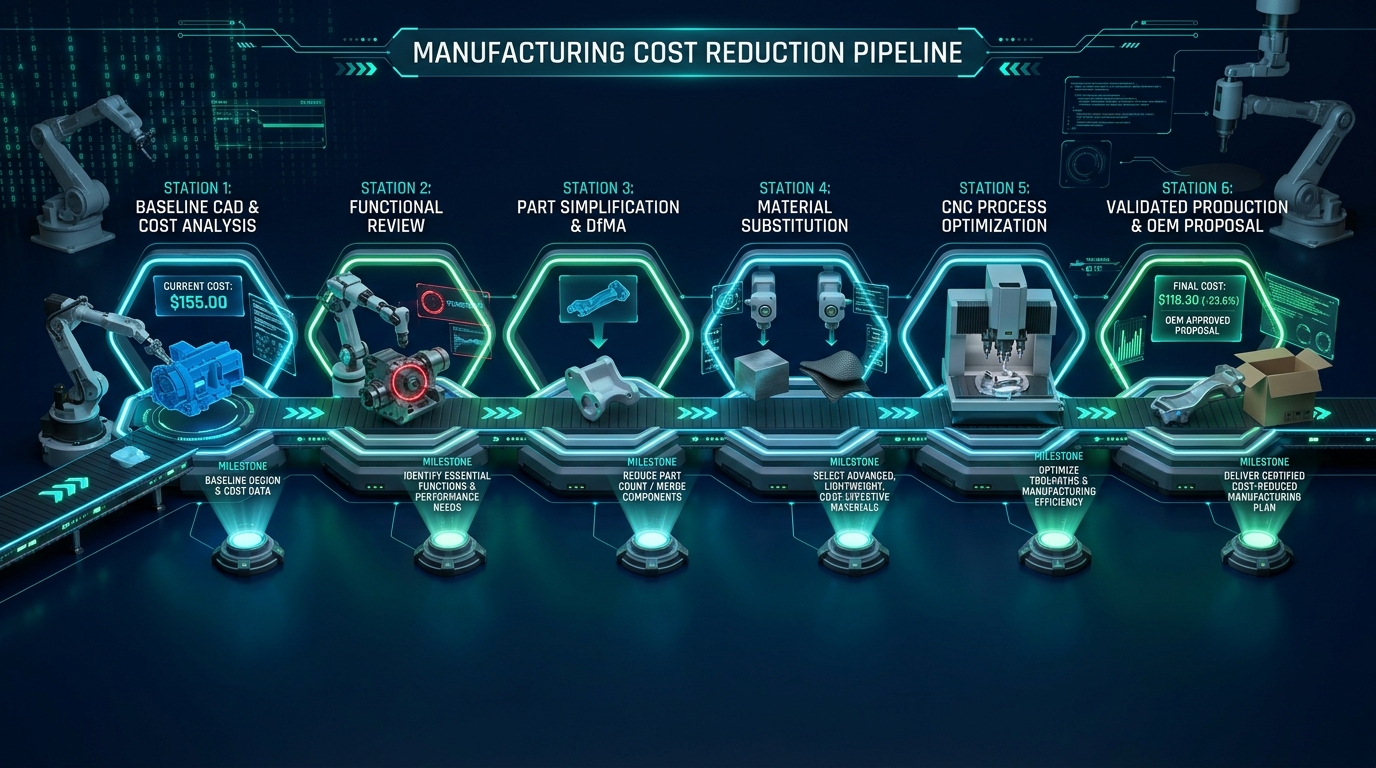
Cost Reduction Opportunity Explorer
Follow an assembly through our 6-stage engineering opportunity pipeline. Each step validates functional boundaries and implements targeted design modifications to maximize manufacturing cost reduction.
Original Design Baseline
Establish BOM cost benchmark, weight distribution, and primary supplier quotation baseline.
Function Review
Classify primary vs secondary component functions to isolate structural over-engineering.
Design Simplification
Consolidate mating brackets and eliminate non-essential hardware joints.
Material Change
Substitute costly imported alloys with equivalent Indian standard high-yield sheet metal.
Manufacturing Optimisation
Optimise nesting layouts and reduce secondary CNC machining cycle times by 35%.
Validated OEM Proposal
Deliver production-ready engineering CAD packages with empirical 31.4% cost savings.
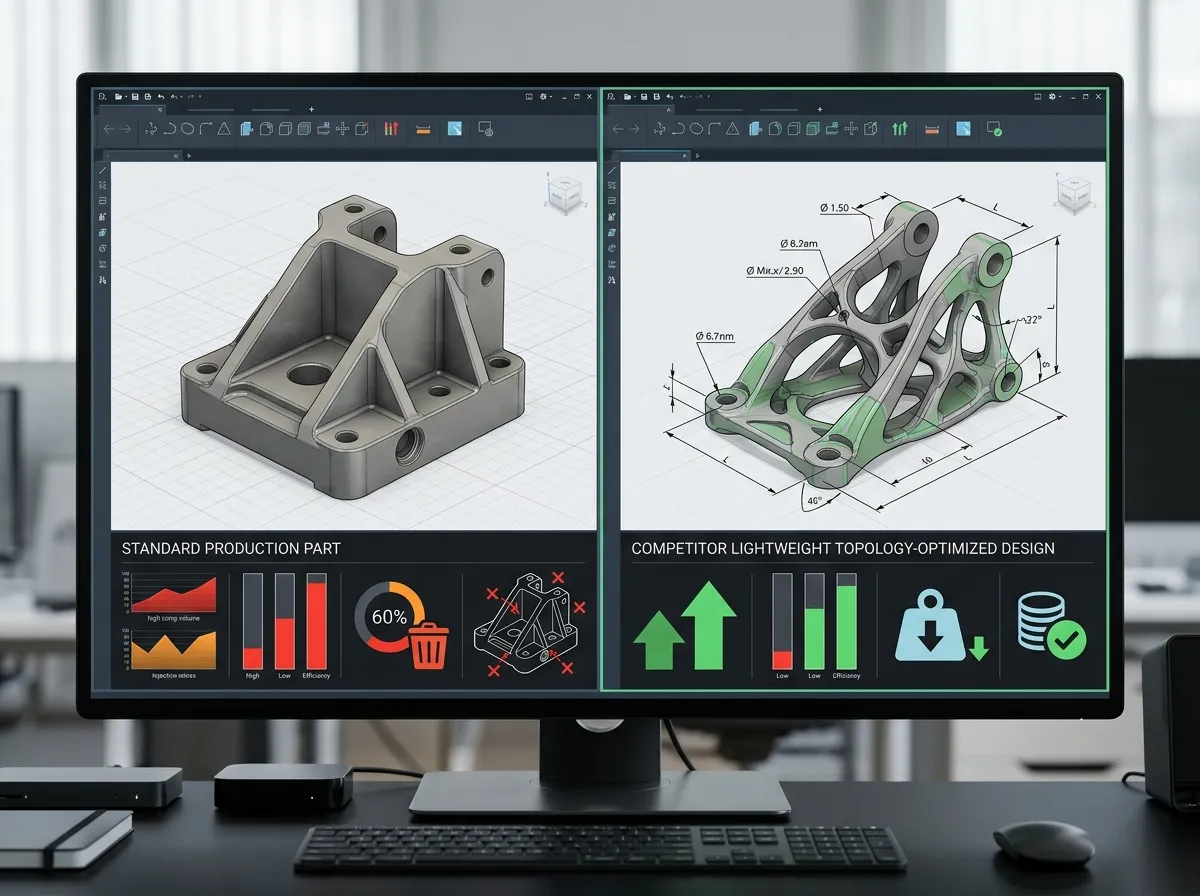
Competitive Intelligence Through Teardown
Our split teardown comparison engine benchmarks your design directly against market leaders. Using empirical teardown-based benchmarking and should-cost modelling, we expose competitive advantages in geometry and manufacturing.
Heavy Machined Cast Housing
Features wall thickness of 8.5mm with extensive secondary surface routing. Higher raw material weight and prolonged CNC machining cycles increase unit manufacturing expense.
Ribbed Thin-Wall Die Casting
Utilizes engineered structural ribbing with 4.2mm nominal walls. Eliminates secondary milling while improving thermal dissipation and slashing part weight by 38%.
Why APJ Delivers Better Value Engineering
We practice engineering-first value engineering rather than procurement-first cost cutting. Every optimization pathway traverses structural finite element validation and manufacturing cycle analysis to ensure seamless production adoption.
Requirement Mapping
Capture customer functional specifications and environmental performance limits.
Engineering Validation
Simulate structural stresses and fatigue thresholds for modified components.
Manufacturing Review
Verify supplier tool capabilities, machine speeds, and fixture setups.
Production Ready
Deliver verified CAD drawings with empirical cost reduction guarantees.
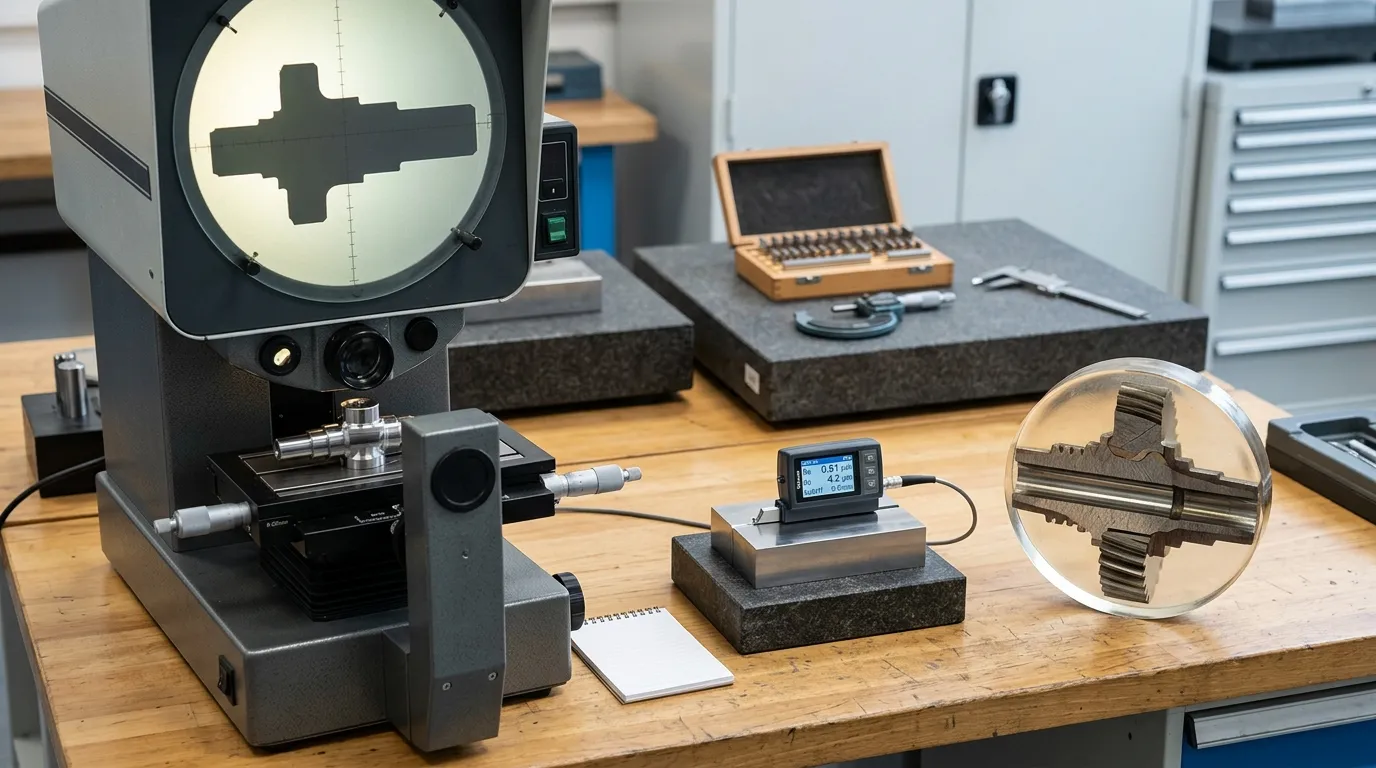
What is Value Engineering and Cost Reduction Services India?
Competitive Benchmarking and Should-Costing is the structured physical disassembly, material identification, process cycle-time estimation, and bottom-up cost modeling of competitor products and vehicle subsystems.
When to Select This Service
Choose teardown and should-costing when seeking actionable VAVE cost-reduction roadmaps (typically 10%–25% savings), supplier quotation validations, or competitive product intelligence.
Technical Capabilities & Verification Standards
Verified engineering parameters, hardware precision, and compliance benchmarks applied across all deliverables.
| Engineering Parameter | APJ 3D Capability & Precision Range | Compliance Standard / Verification |
|---|---|---|
| VAVE Engineering Consulting | Systematic function-first analysis decoupling product performance from conventional manufacturing traditions | APJ VAVE Engineering Framework |
| Product Value Analysis | Component function review mapping primary, secondary, and redundant features against direct procurement cost allocations | Function-to-Cost Ratio Review |
| Should-Cost Modelling | Bottom-up engineering cost build-up calculating material, overhead, labor, cycle time, and machine hour rates across Indian supply chains | Should-Cost Modelling |
| DFM Cost Analysis | Design simplification targeting tool draft angles, parting line optimization, and elimination of secondary machining operations | DFM Cost Analysis |
| Function vs Cost Matrix | Quadrant-based plotting of component function importance against manufacturing cost intensity to isolate consolidation or elimination candidates | Interactive Function vs Cost Matrix |
| Teardown Benchmarking | Physical product dissection and competitive intelligence revealing how industry leaders optimize component geometry and weight | Teardown Benchmarking |
| Deliverables | Empirically backed technical dossiers ready for sign-off by engineering design heads and manufacturing procurement leaders | Production Ready OEM Reports |
Frequently Asked Questions
What is included in a product teardown report?
What is included in a product teardown report?
How does should-costing help in supplier negotiations?
How does should-costing help in supplier negotiations?
What is VAVE and how do you generate savings ideas?
What is VAVE and how do you generate savings ideas?
Can you benchmark electric vehicle (EV) battery packs and powertrains?
Can you benchmark electric vehicle (EV) battery packs and powertrains?
How do you maintain confidentiality and intellectual property during teardowns?
How do you maintain confidentiality and intellectual property during teardowns?
Eliminate Cost. Preserve Function. Improve Product Value.
Whether you need value engineering and cost reduction services, VAVE engineering consulting, product value analysis, should-cost modelling, or DFM cost analysis, APJ 3D helps engineering teams identify unnecessary cost, validate design improvements, and implement manufacturing-ready optimisation backed by empirical evidence.