Design-to-Cost Engineering Services India
Engineering the Cost Target Before Tooling.
Target costing engineering analysis, DTC product development consulting, and DFMC validation. We engineer cost targets directly into early CAD geometry before tooling commitment.
Every Design Decision Changes Cost
Our design-to-cost engineering services transform subjective engineering choices into data-driven cost outcomes. Explore how each CAD variable drives manufacturing economics.
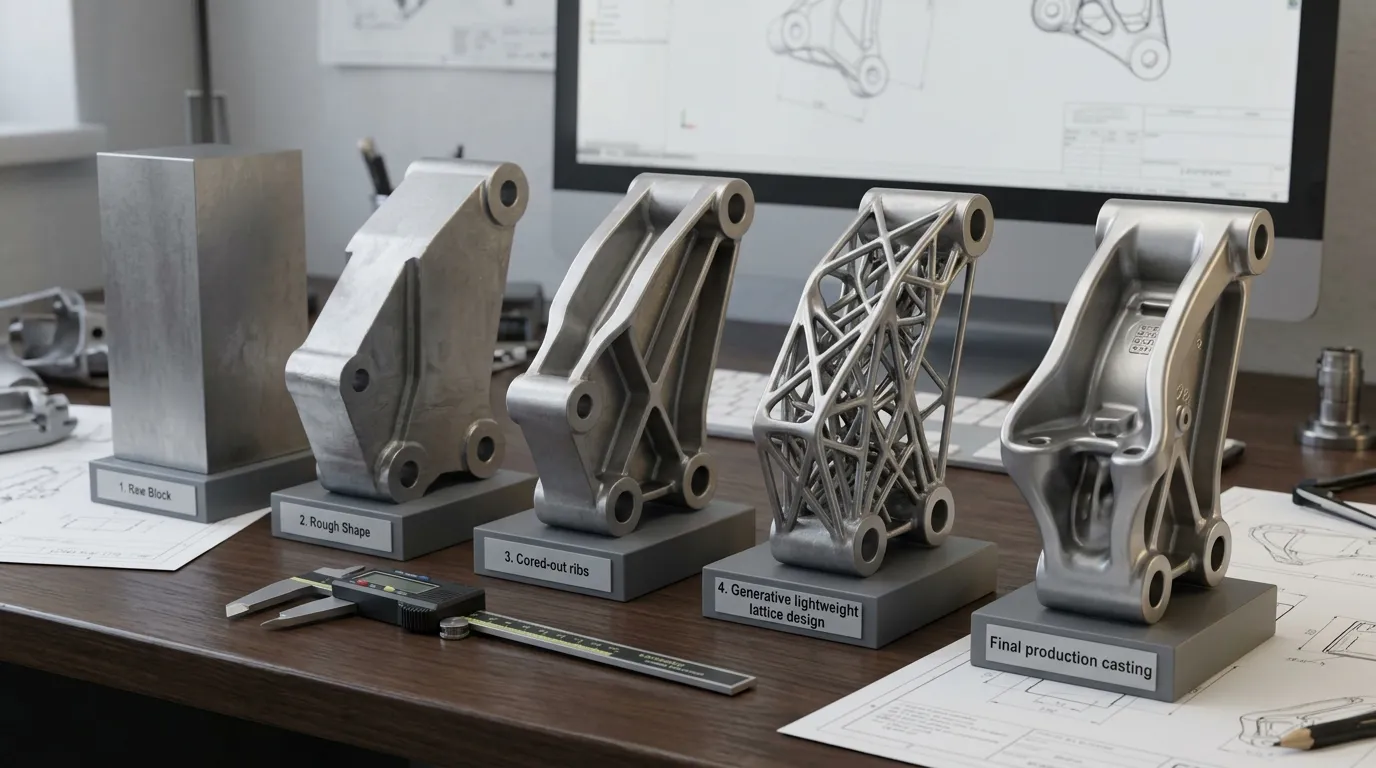
1. Geometry & Wall Thickness
→2. Material Grade Selection
→3. Manufacturing Process Route
→4. Tolerance Bands & GD&T
→5. Assembly Strategy & Fasteners
→Geometry & Wall Thickness Optimization
Uniform 3mm wall thickness eliminates sink marks and reduces cycle cooling time by 22% in injection molding.
Simpler mold cavity filling and reduced tonnage requirement on press machines.
Transition thick ribs to cored-out gussets to save resin weight without losing structural rigidity.
Design-to-Cost Engineering Framework
Four synchronized engineering rings orbiting around the central target cost, ensuring every component meets both performance and budget criteria.

Target Costing Analysis
Rigorous component cost allocation and BOM allowance distribution. We identify exact cost gaps early in the conceptual phase before tooling commitment.
DTC Product Consulting
Collaborative engineering reviews bridging R&D and commercial goals. Iterative concept scoring ensures cost-optimised product design.
CAD Geometry Morphing
Simultaneous optimization of material selection, feature geometry, and manufacturing routing to eliminate unnecessary production complexity.
DFMC Validation
Design for Manufacturing and Cost validation. Verifying tolerance stack-ups and shop floor capability to ensure seamless production readiness.
Interactive Design Journey
Experience our horizontal design studio workstation where floating sticky notes capture live engineering decisions and cost effects across every project milestone.
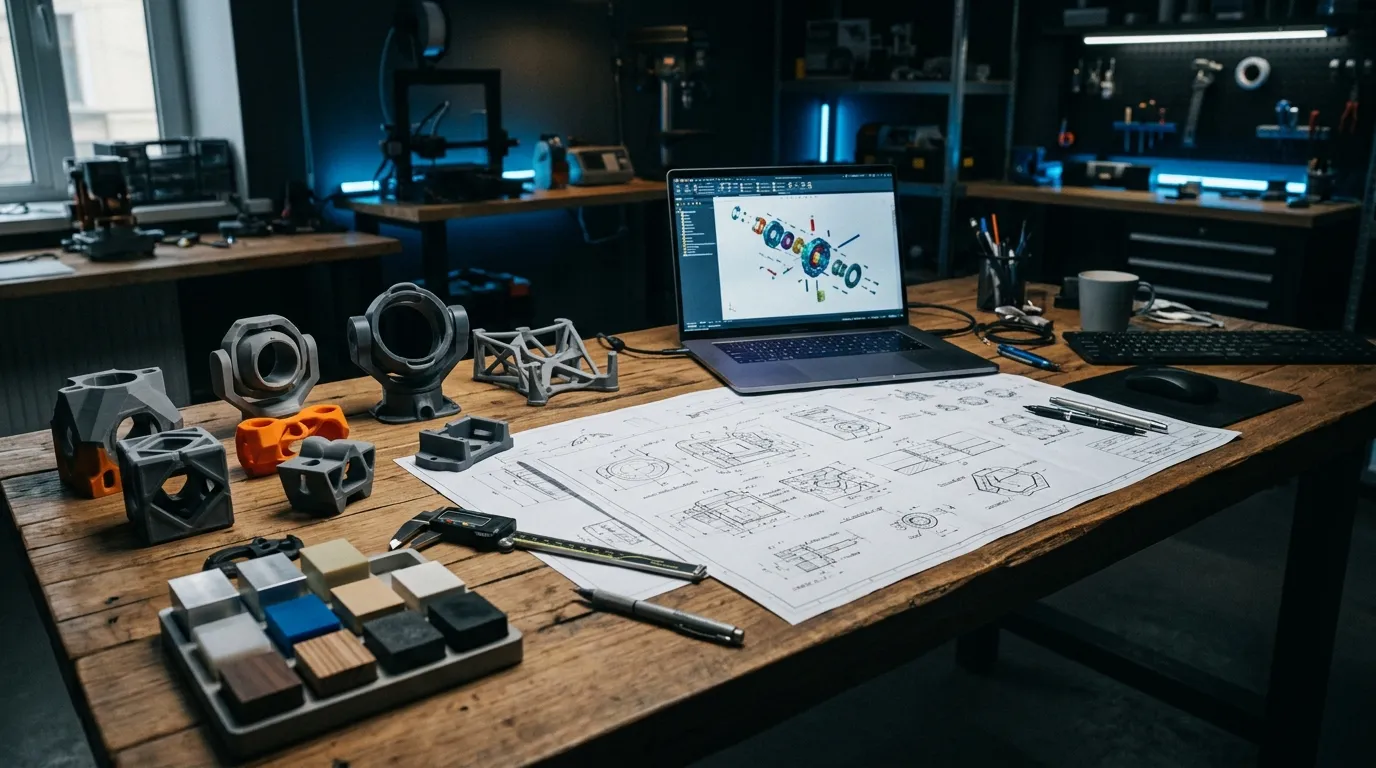
Concept Ideation
Establish target costing engineering analysis envelope and primary functional specs.
Material Selection
Evaluate alloy & polymer alternatives for strength-to-weight and raw commodity cost.
Geometry Morphing
Refine draft angles, radii, and rib layouts to speed up machining and molding cycles.
Tolerance Review
Relax non-critical GD&T bands to prevent expensive secondary grinding operations.
Production Freeze
Final DFMC validation confirming product achieves target cost prior to tooling kickoff.
Before vs After Design Optimisation
Visualizing how CAD morphing and DTC product development consulting strip away unnecessary overdesign to achieve lean manufacturing efficiency.
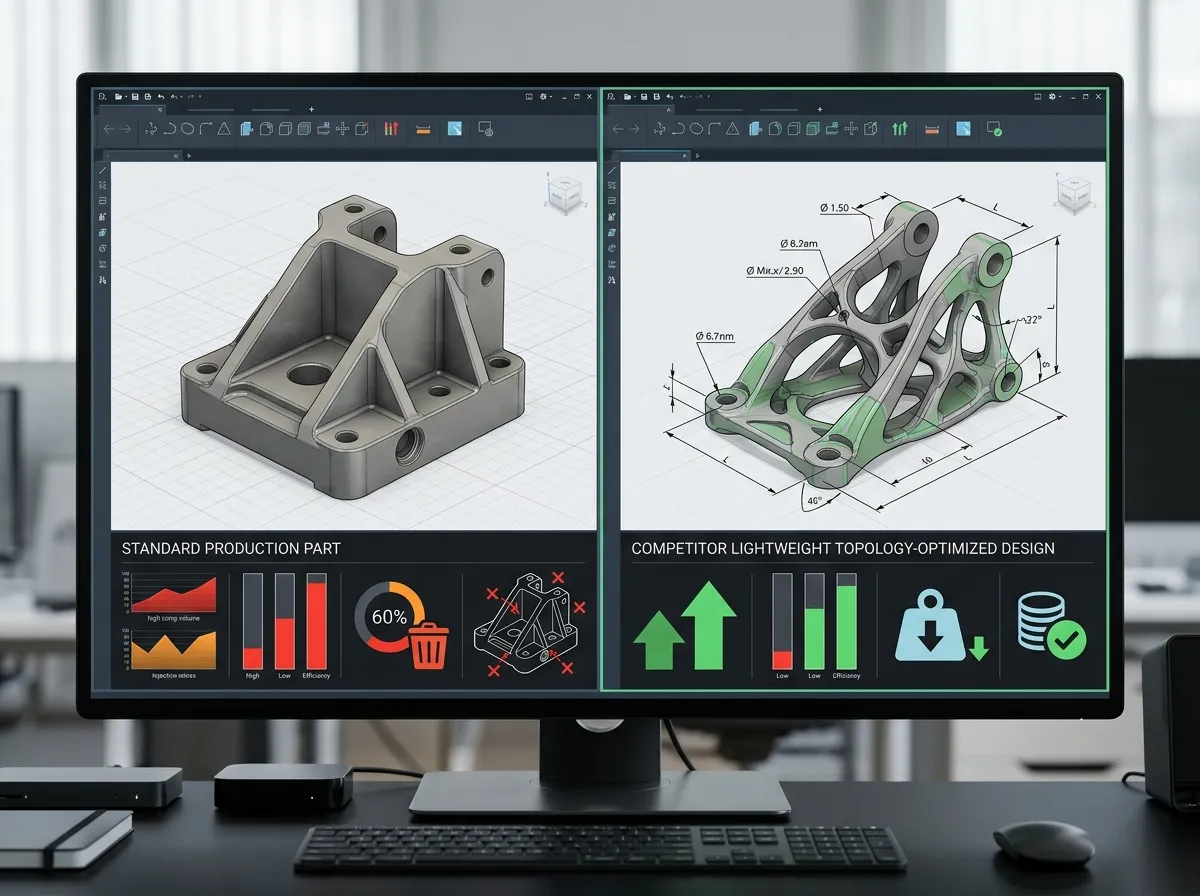
Legacy Component Architecture
- ✕ Heavy billet block geometry requiring 65% material removal
- ✕ Extremely tight ±0.01mm tolerances across non-mating faces
- ✕ Complex multi-part welded assembly with 12 separate fasteners
- ✕ High baseline cost: ₹3,850 / unit
Cost-Optimised Production Model
- ✓ Near-net structural casting with thin-wall ribbed gussets
- ✓ Functional GD&T relaxing non-critical faces to ±0.15mm
- ✓ Consolidated single-piece net shape eliminating welding rework
- ✓ Achieved target cost: ₹2,420 / unit (-37% Savings)
Industries & Design Applications
Interactive design concept cards pinned across our studio wall, showcasing industry-specific target costing engineering solutions.
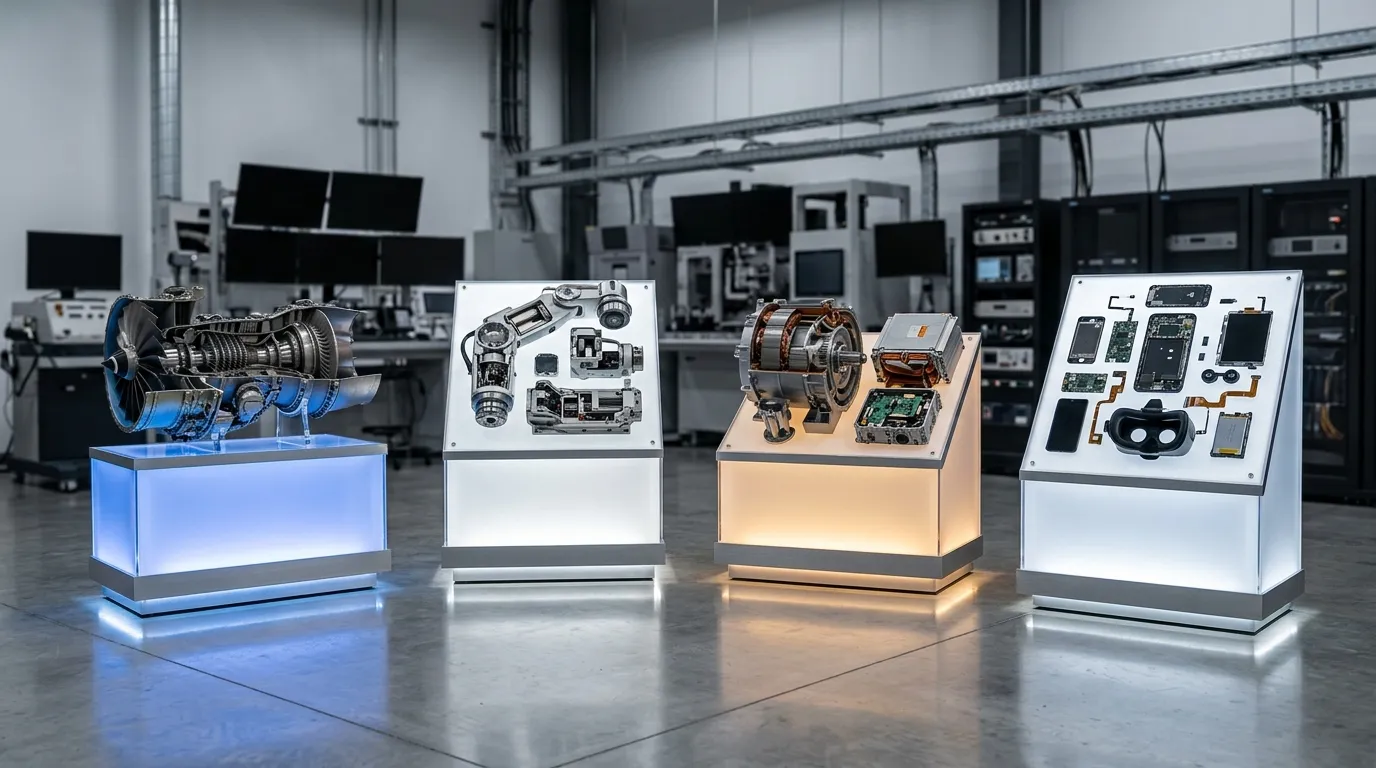
Automotive Design-to-Cost Engineering
Focusing on body-in-white structural stamping & casting brackets. Our engineering strategy applies thin-wall ribbing & die draw angle simplification to achieve strict commercial targets.
Why APJ Design-to-Cost Engineering
Our digital engineering balance scale aligns superior mechanical performance directly with commercial target cost requirements.
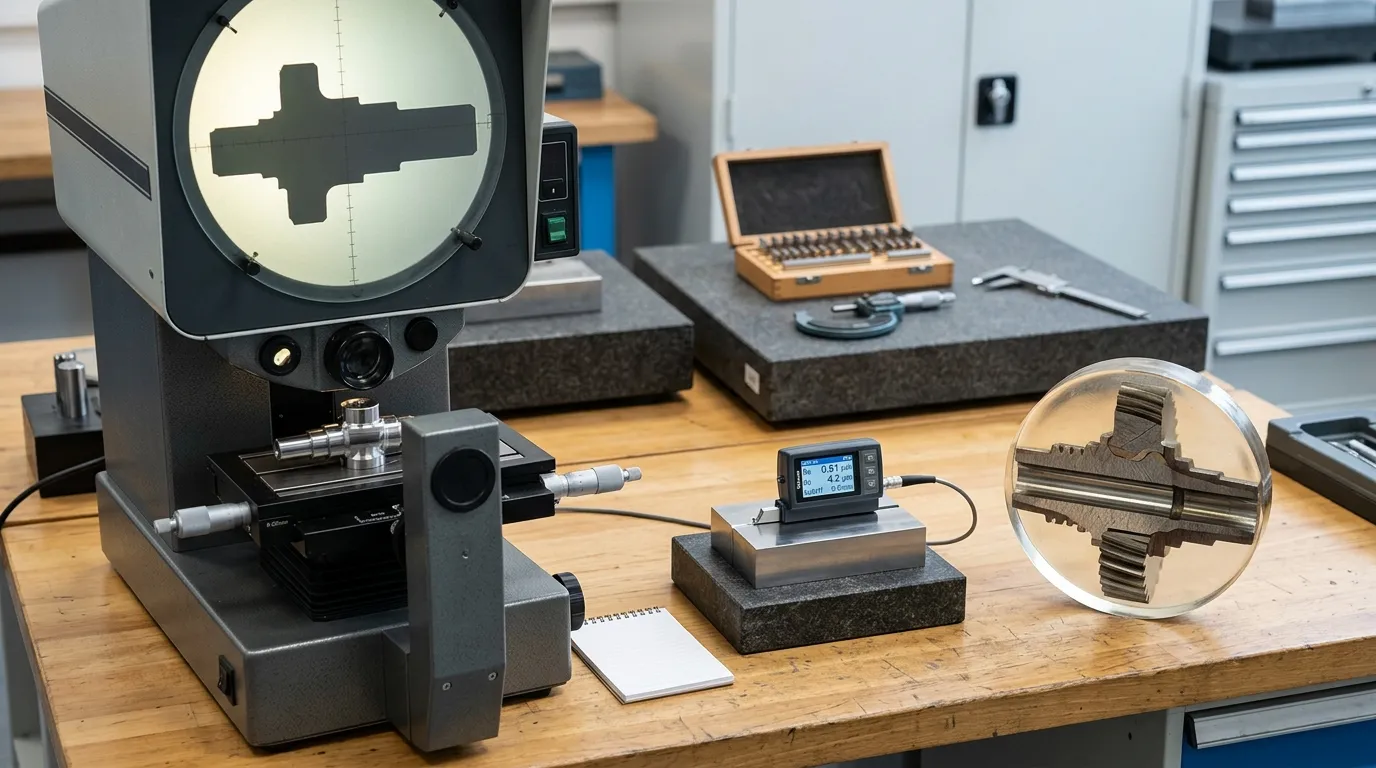
Balancing Engineering Excellence with Unit Cost
APJ 3D eliminates the traditional conflict between engineering design teams and cost estimators. By running DFMC checks inside active CAD sessions, we deliver high-performance products that are profitable from day one.
What is Design-to-Cost Engineering Services India?
Design-to-Cost (DTC) Engineering is a target-costing methodology that engineers a defined cost target directly into early CAD geometry and material/process selection, validated through DFMC (Design for Manufacturing and Cost) analysis before tooling commitment.
When to Select This Service
Choose design-to-cost engineering when a program has a fixed cost target that design must meet, or when you need DFMC validation to catch cost overruns in CAD geometry before tooling is committed.
Technical Capabilities & Verification Standards
Verified engineering parameters, hardware precision, and compliance benchmarks applied across all deliverables.
| Engineering Parameter | APJ 3D Capability & Precision Range | Compliance Standard / Verification |
|---|---|---|
| Target Costing Analysis | Component cost allocation and BOM allowance distribution to identify cost gaps early in the conceptual phase before tooling commitment | Pre-Tooling Cost Gap Identification |
| Geometry & Wall Thickness Optimization | Uniform wall thickness and rib-to-gusset conversion to eliminate sink marks and reduce cycle cooling time in injection molding | Cycle Time & Sink Mark Reduction |
| DFMC Validation | Design for Manufacturing and Cost checks run inside active CAD sessions to align performance with commercial cost targets | In-CAD DFMC Checks |
| Design Stage Coverage | Target cost tracking from wireframe CAD concept through refinement to final DFMC validation prior to tooling kickoff | Concept-to-Tooling Cost Tracking |
| Industry Application | Automotive body-in-white stamping, consumer product injection molding, and aerospace structural components | Multi-Industry DTC Application |
| Demonstrated Cost Outcome | Documented case achieving target cost with a 37% savings versus baseline through geometry and process optimization | Verified Cost-Reduction Case Study |
Frequently Asked Questions
Which 3D printing process is right for my application?
Which 3D printing process is right for my application?
How does 3D printing cost compare to injection moulding?
How does 3D printing cost compare to injection moulding?
What CAD file formats are accepted for 3D printing quotes?
What CAD file formats are accepted for 3D printing quotes?
What is the typical turnaround time for orders in India?
What is the typical turnaround time for orders in India?
Can 3D printed parts be tapped with threads or post-machined?
Can 3D printed parts be tapped with threads or post-machined?
The Best Time to Reduce Cost Is Before the Design Is Frozen
Whether you need design-to-cost engineering services, target costing engineering analysis, DTC product development consulting, cost-optimised product design, or design for manufacturing and cost (DFMC), APJ 3D integrates engineering and cost intelligence into every decision—helping teams achieve target costs before tooling begins.