Crash & Impact Simulation
Services India
Simulate structural survival before physical prototyping. We provide OEM-grade crashworthiness, explicit dynamics, and impact analysis services for the automotive and manufacturing sectors.
Every Failed Prototype Already Cost Too Much.
Physical crash testing is the final exam, not the study guide. Stop burning capital on iterative destruction.
Concept & Design
Initial design phase. Structural flaws exist but remain completely invisible to standard analysis tools.
Prototype Tooling
Massive capital sunk into expensive molds, custom fabrication, and physical test parts.
Crash Test & Failure
Structural collapse. Energy absorption targets missed. Weeks of development time entirely wasted.
Simulate First. Test Later.
Predict failure precisely before a single physical part is built. Save months of iteration.
THE 200 MILLISECOND BREAKDOWN
Hover over the timeline nodes to see exactly what our crash simulations evaluate within the blink of an eye.
0-10ms: Initial Contact
Bumper fascia and low-speed absorbers crush. Peak G-forces spike instantly.
30ms: Load Path Activation
Impact energy transfers into primary crash rails and subframes.
60ms: Energy Absorption
Axial crushing of structural tubes. Maximum kinetic energy dissipation occurs.
100ms: Material Yielding
Structures buckle. Analysis checks if passenger cabin remains uncompromised.
150ms: Structural Collapse
Engine mass shifts. Firewalls endure max stress. Rebound kinematics begin.
200ms: Final Deformation
Event concludes. Residual plastic strain and total intrusion are measured.
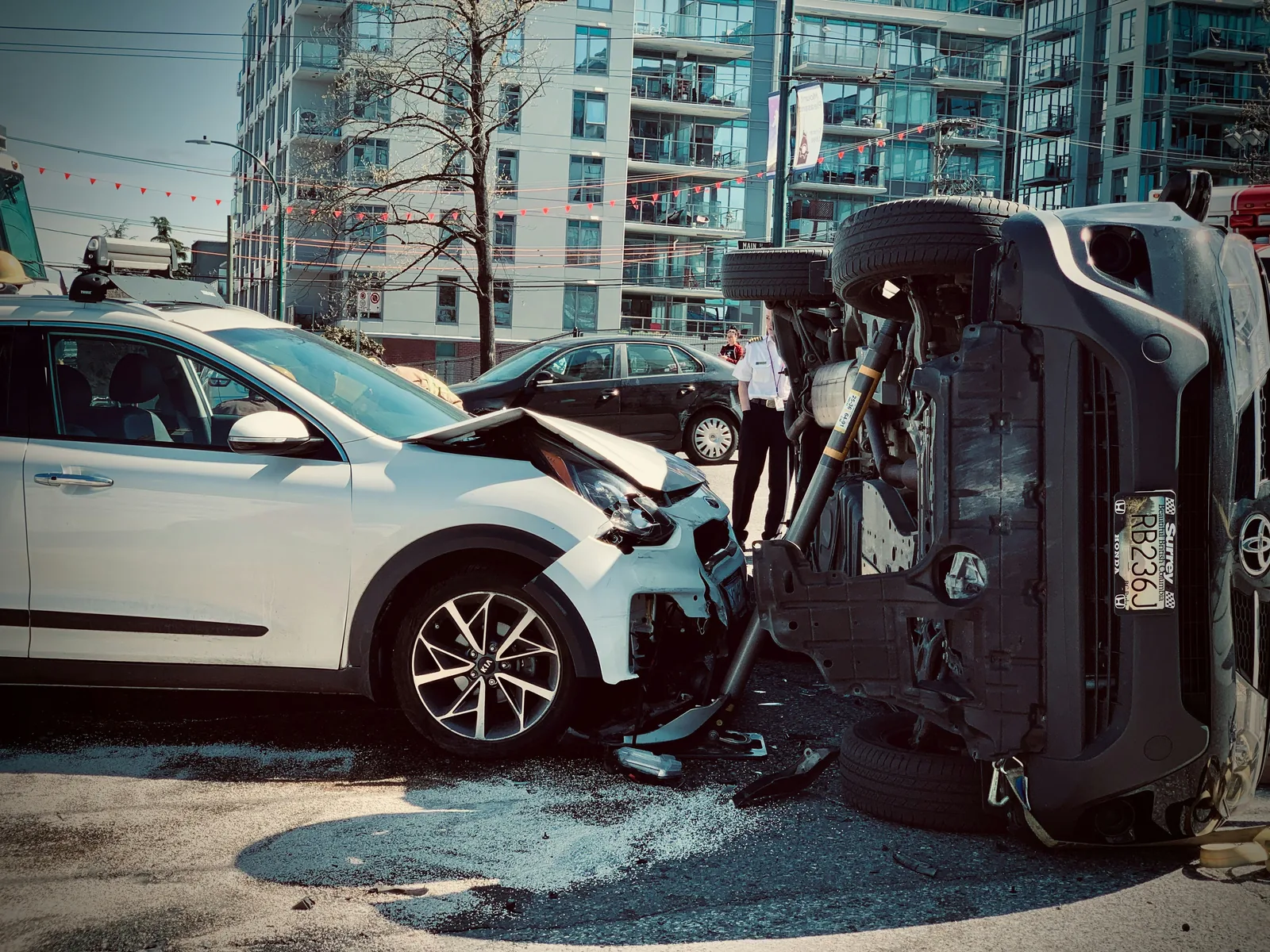
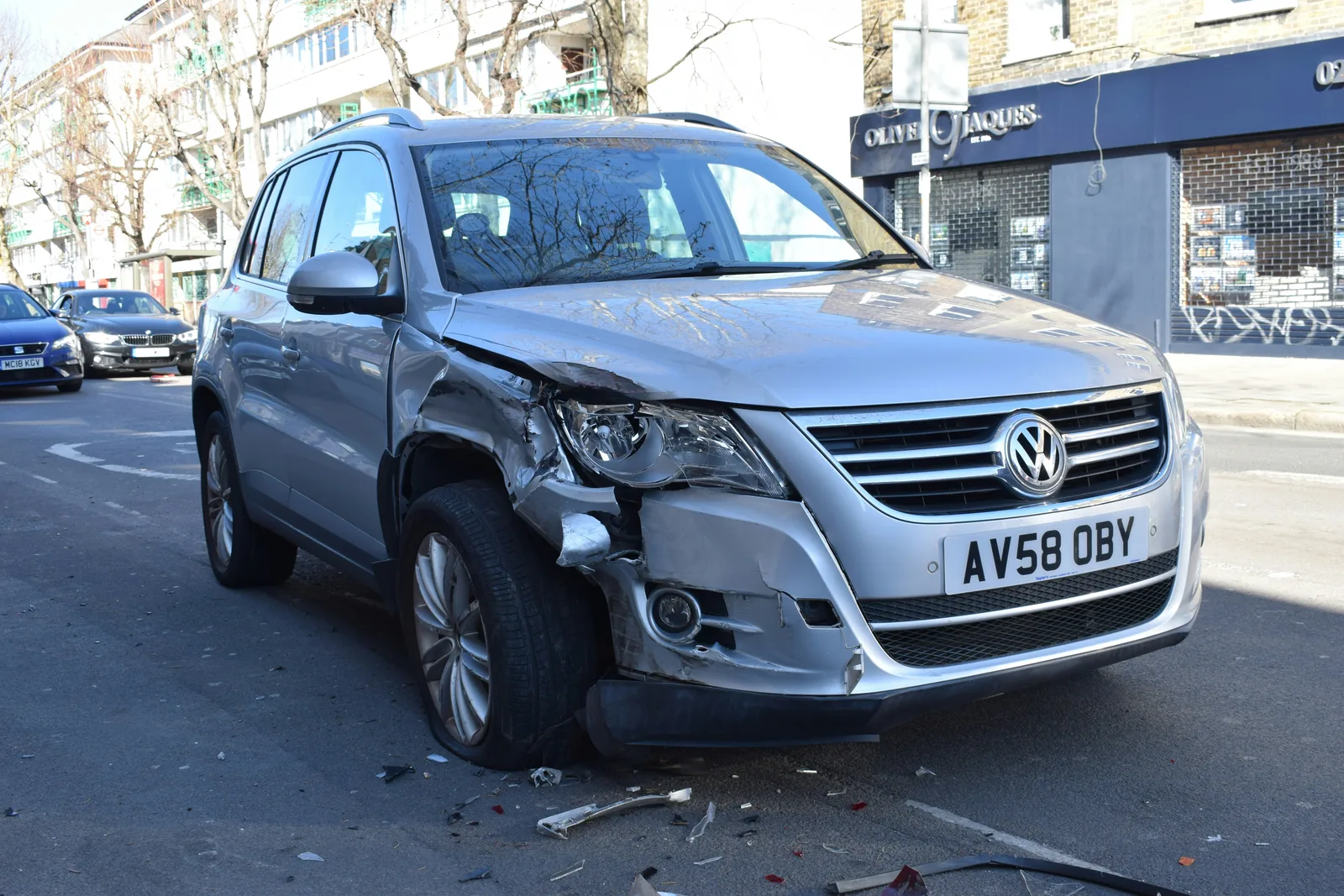
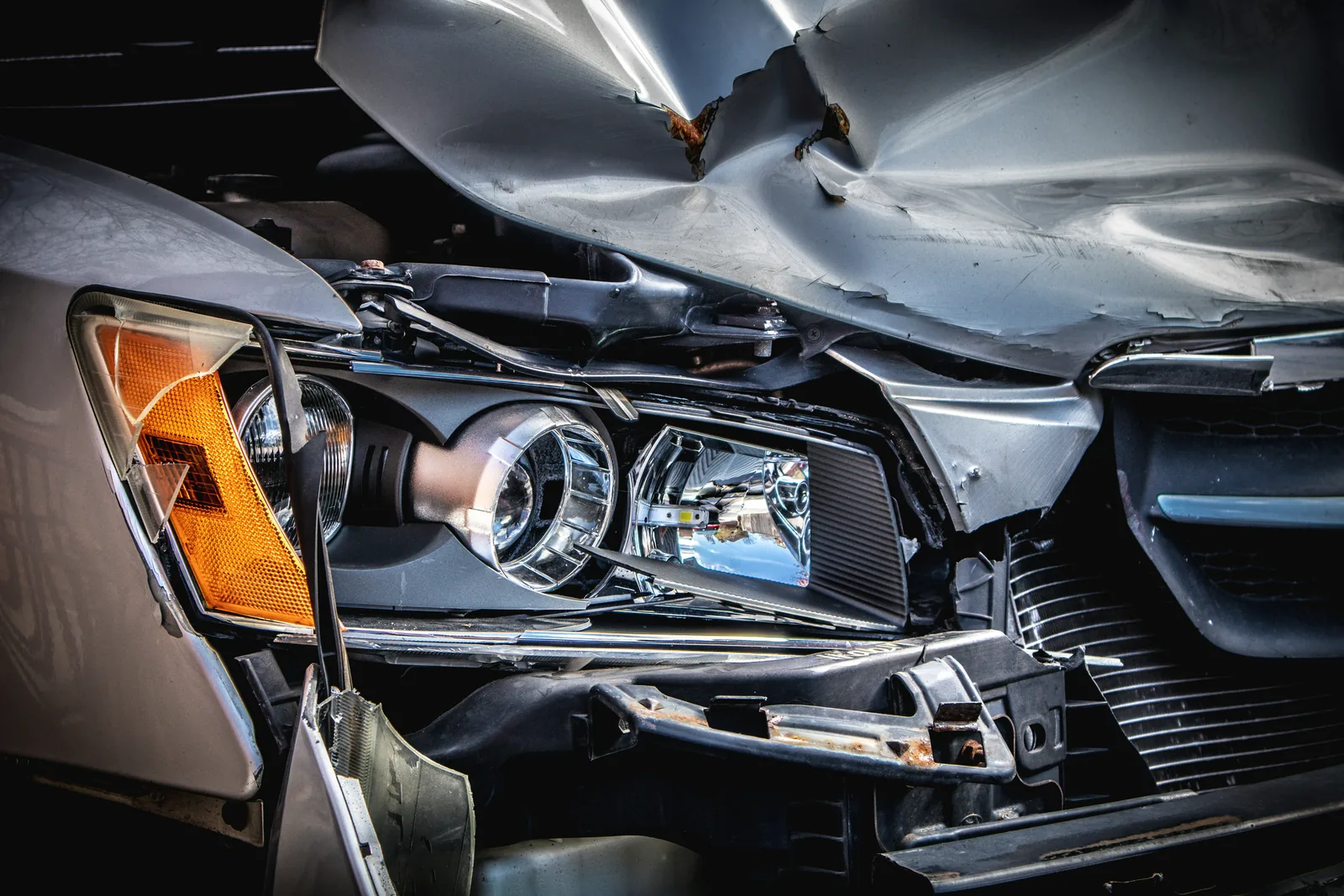
Impact Scenarios We Simulate
Select an impact scenario to visualize our structural analysis capabilities.

Crashworthiness Applications

Automotive OEM Suppliers
Crash structures, door beams, and energy-absorbing crash boxes engineered for maximum kinetic dissipation.

Vehicle Manufacturers
Full vehicle AIS, ECE, and NCAP simulation development to ensure global regulatory compliance and passenger safety.
Industrial Equipment
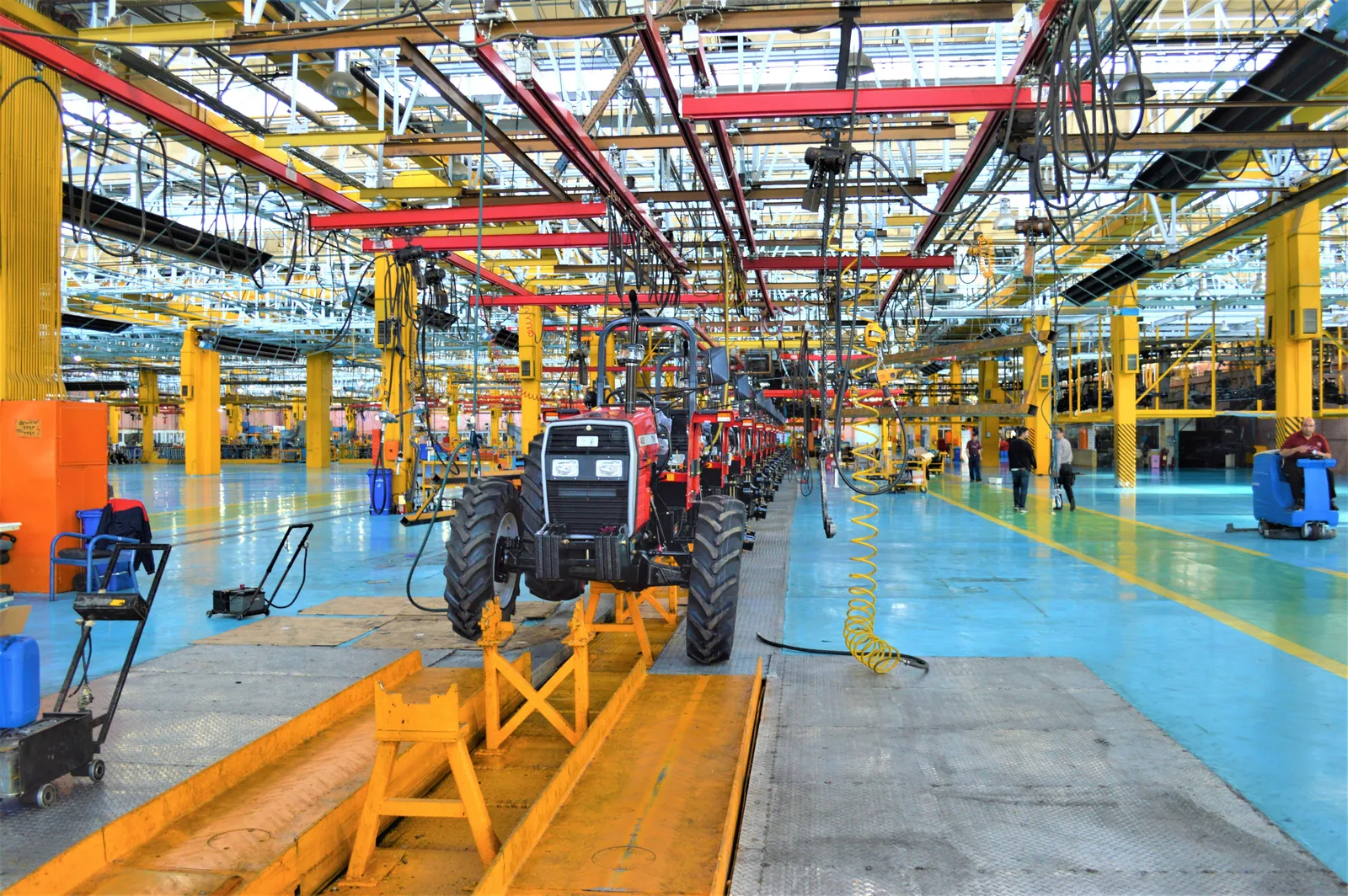
Heavy-duty protective housings, ROPS/FOPS, and safety barriers for mining, construction, and manufacturing.

Packaging & Transport
Drop tests and fragile equipment protection systems designed to survive extreme logistical impacts.
Engineering Control Room
Explicit Dynamics Solvers
High-fidelity nonlinear analysis for sub-second impact events and high-velocity crashes.
Large Deformation Analysis
Tracking severe material yielding and geometric distortions during catastrophic failures.
Complex Contact
Self-contact and multi-body interactions.
Energy Absorption
Quantifying kinetic energy dissipation.
Structural Load Paths
Mapping stress flow and load distribution across assemblies during impact.
Crashworthiness Validation
Simulating global regulatory standards (NCAP, IIHS) for complete vehicle safety validation.
Results That Drive Decisions
Slide to compare a failing structural design versus our engineering optimization.
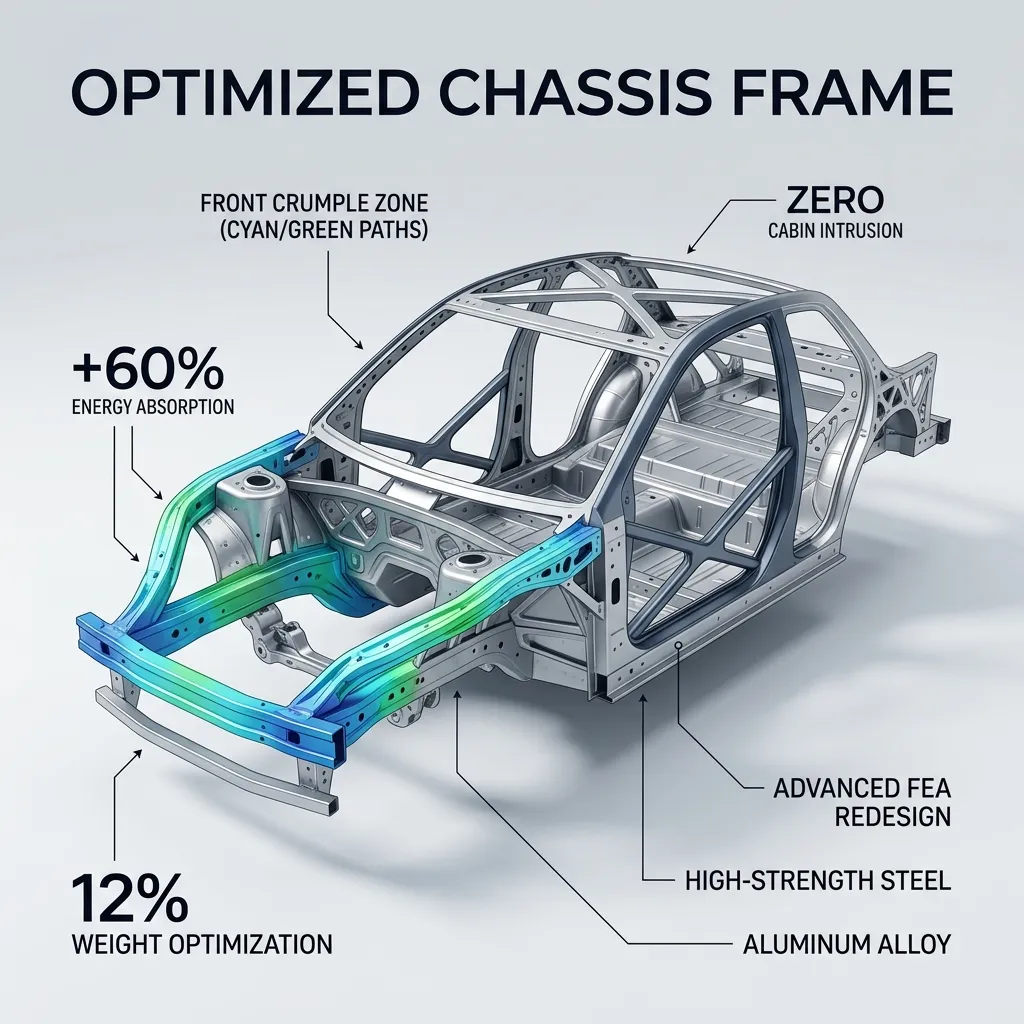
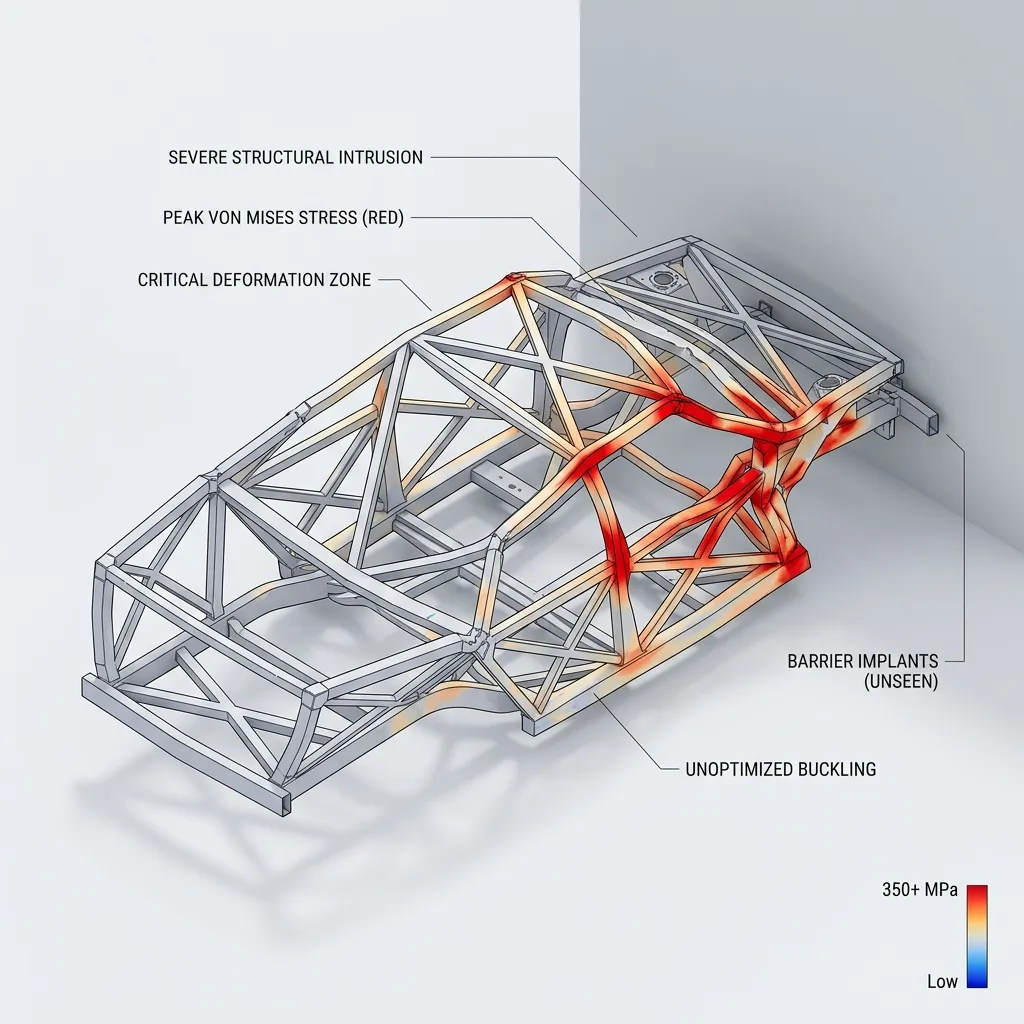
What is Crash & Impact Simulation Services India?
CAE Simulation (FEA & CFD) is the numerical modeling of physical systems to predict structural stress, thermal dissipation, fluid flow, crashworthiness, and dynamic fatigue life under real-world operational loads.
When to Select This Service
Choose CAE simulation during early product development to virtually validate design integrity, optimize part weight, verify safety factors, and eliminate physical prototype failure risks before committing to production tooling.
Technical Capabilities & Verification Standards
Verified engineering parameters, hardware precision, and compliance benchmarks applied across all deliverables.
| Engineering Parameter | APJ 3D Capability & Precision Range | Compliance Standard / Verification |
|---|---|---|
| Simulation Disciplines | Linear/Non-Linear Structural FEA, Thermal Analysis, CFD Fluid Dynamics, Crash & Impact, Fatigue & Durability, NVH | ISO 9001 / NAFEMS Validated Procedures |
| Solvers & Software | ANSYS Mechanical, Abaqus, Altair HyperWorks/OptiStruct, Moldflow, OpenFOAM, LS-DYNA | High-Performance Computing (HPC) Clusters |
| Material Models | Elastic-Plastic metals, Hyperelastic rubbers, Composites, Viscoelastic polymers, Temperature-dependent curves | Tested Material Property Databases |
| Mould Flow Capabilities | Fill time, injection pressure, weld line prediction, sink marks, cooling circuit efficiency, volumetric shrinkage & warpage | Autodesk Moldflow Insight Validated |
| Deliverables | Comprehensive Engineering Reports, Von Mises Stress Plots, Factor of Safety (FoS) Maps, Deformation Animations, Optimization STEPs | Actionable Design Recommendation Summaries |
| Model Scale | From precision micromixers and plastic clips up to full vehicle chassis and industrial equipment weldments | Multi-Million Degree-of-Freedom Meshes |
| Turnaround Time | 3 to 7 business days for standard FEA/CFD studies; 24–48h for urgent gate location & fill checks | Dedicated Senior CAE Analysts |
Frequently Asked Questions
What information is required to start an FEA or CFD simulation?
What information is required to start an FEA or CFD simulation?
How do you validate the accuracy of simulation results?
How do you validate the accuracy of simulation results?
How can Moldflow simulation save tooling costs for plastic parts?
How can Moldflow simulation save tooling costs for plastic parts?
Can you optimize parts for lightweighting and material reduction?
Can you optimize parts for lightweighting and material reduction?
What is included in the final simulation report?
What is included in the final simulation report?
Validate Structural Safety for Your Products?
From Low-Speed Impacts to High-Energy Crashes — APJ 3D Delivers Accurate Crash and Impact Simulation Services Across India.