Mould Flow Filling Analysis Services in India
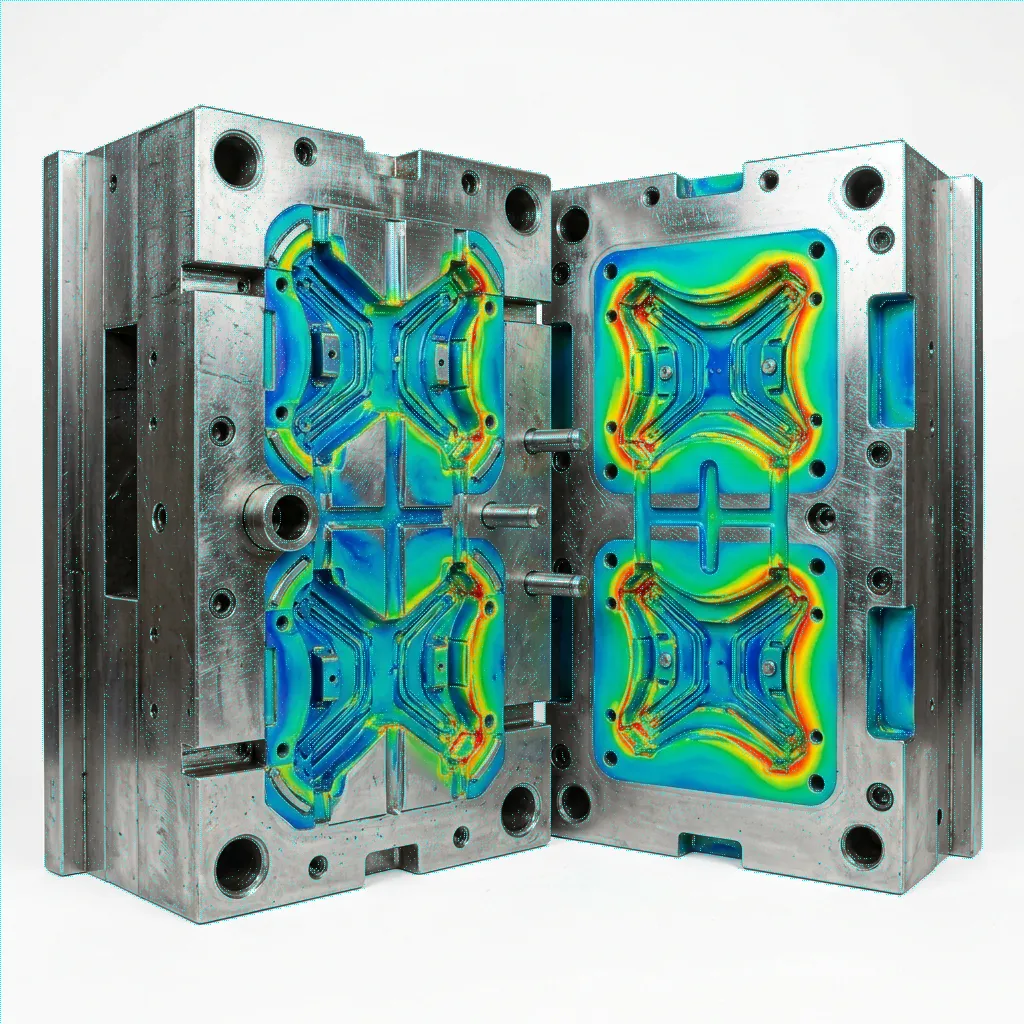
Visualize the molten polymer flow front before the tool exists. Optimize gate locations, prevent weld lines, and eliminate air traps with advanced injection moulding simulation services.
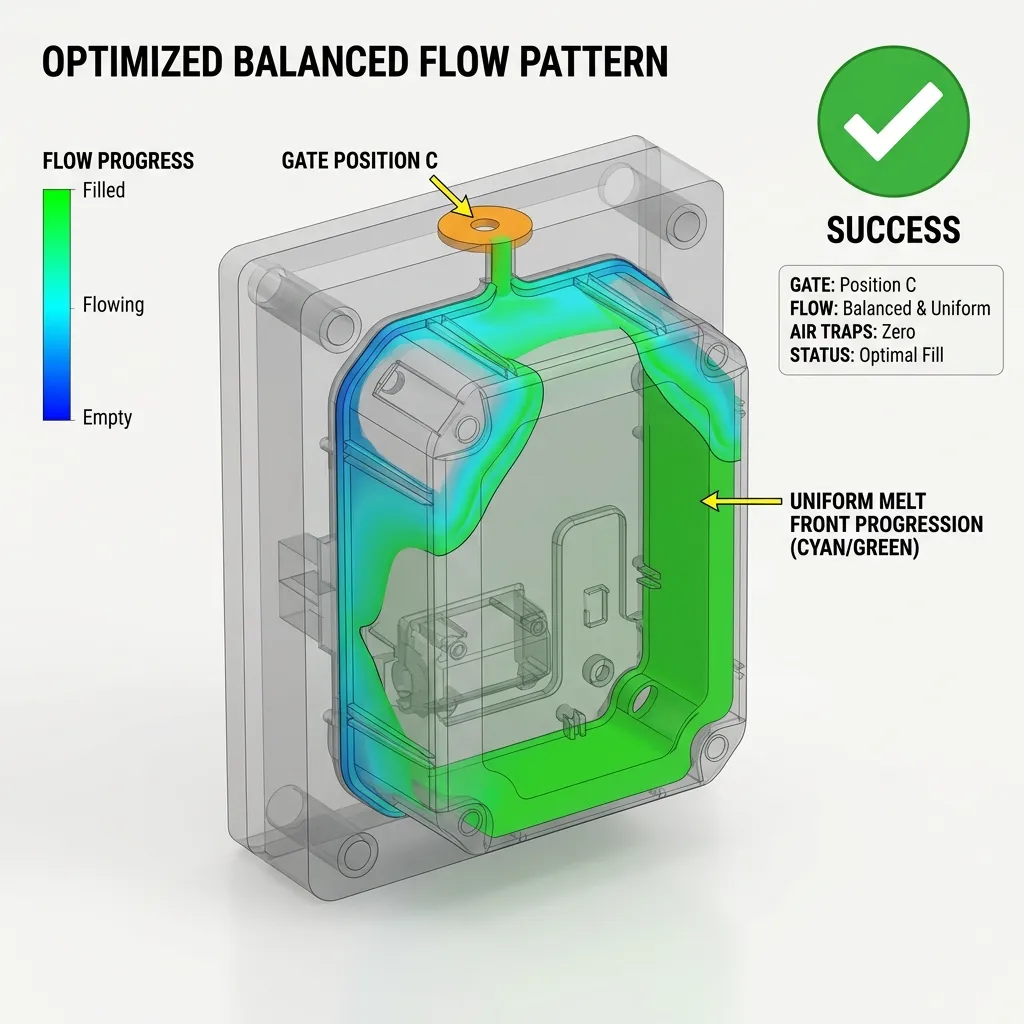
One Gate. Three Outcomes.
Hover over the injection nodes to see why simulation matters before tool steel is cut. Watch the flow front react instantly.
Defect Diagnostics
point to diagnose.
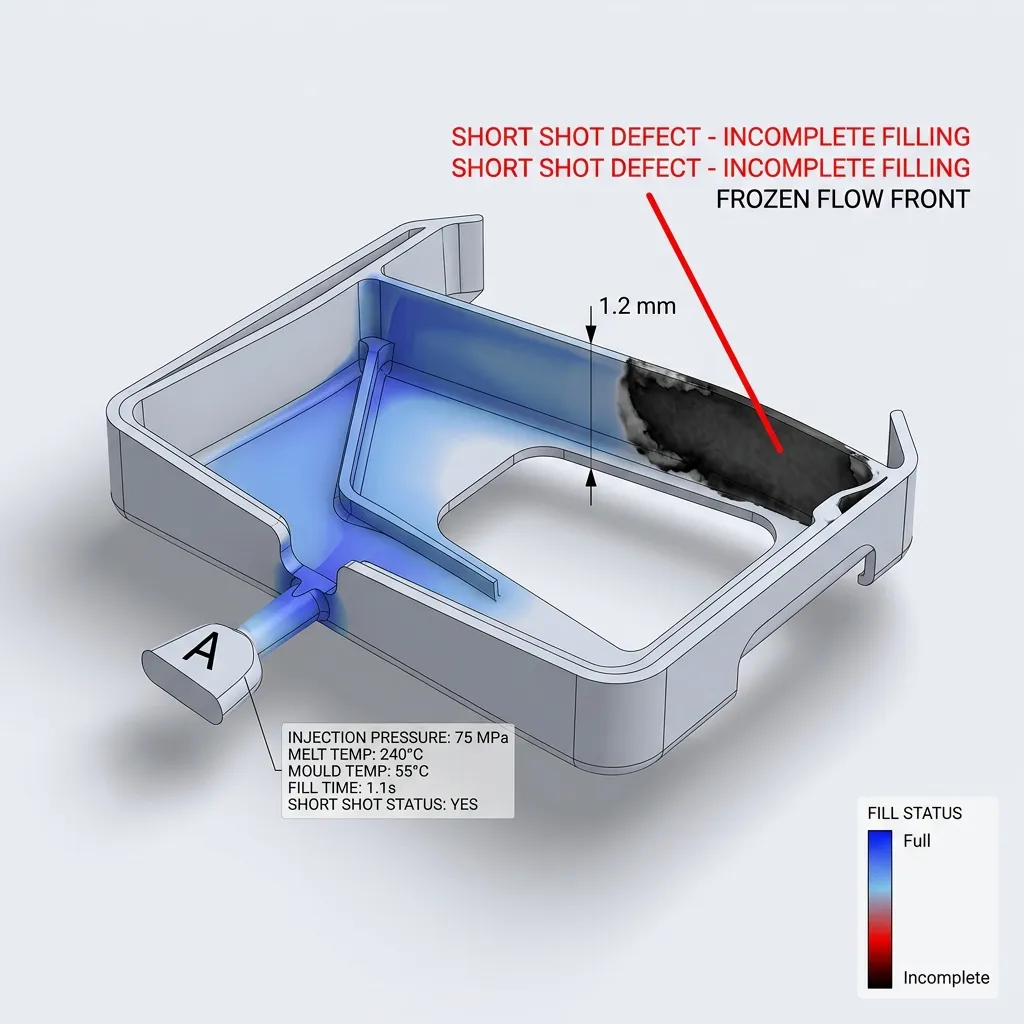
Short Shot Risk
Incomplete plastic fill defect where the cavity is not fully packed, often caused by inadequate pressure.
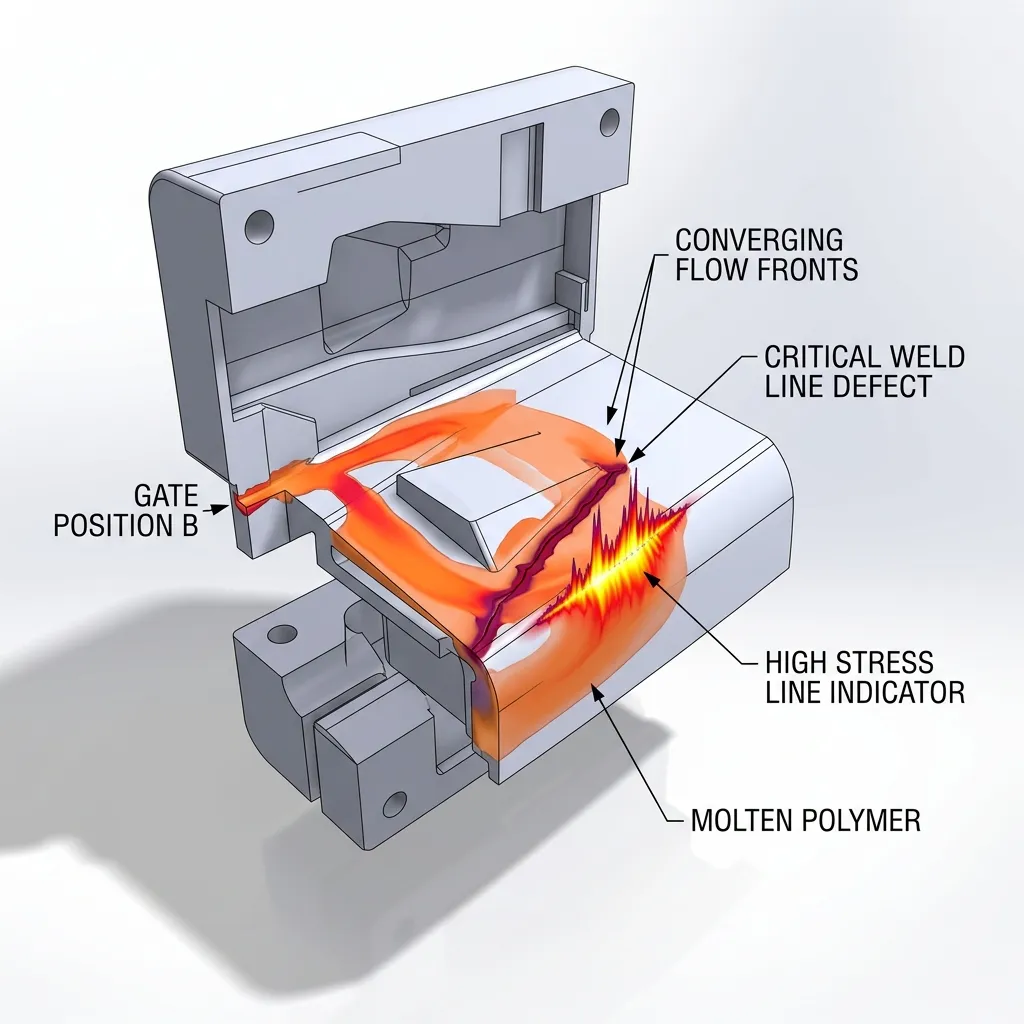
Weld Lines
A critical structural weakness caused by two or more flow fronts meeting and failing to fuse completely.
Air Traps
Pockets of air compressed inside the cavity that cannot escape, leading to unsightly burn marks or voids.
Sink Marks
Shallow surface depressions caused by uneven cooling and localized volumetric shrinkage in thicker sections.
Hesitation Zones
Thin wall areas where the polymer flow stalls or drastically slows down, causing premature freezing.
Race Tracking
Uneven flow progression where molten polymer rushes through thicker sections, trapping air in thinner areas.
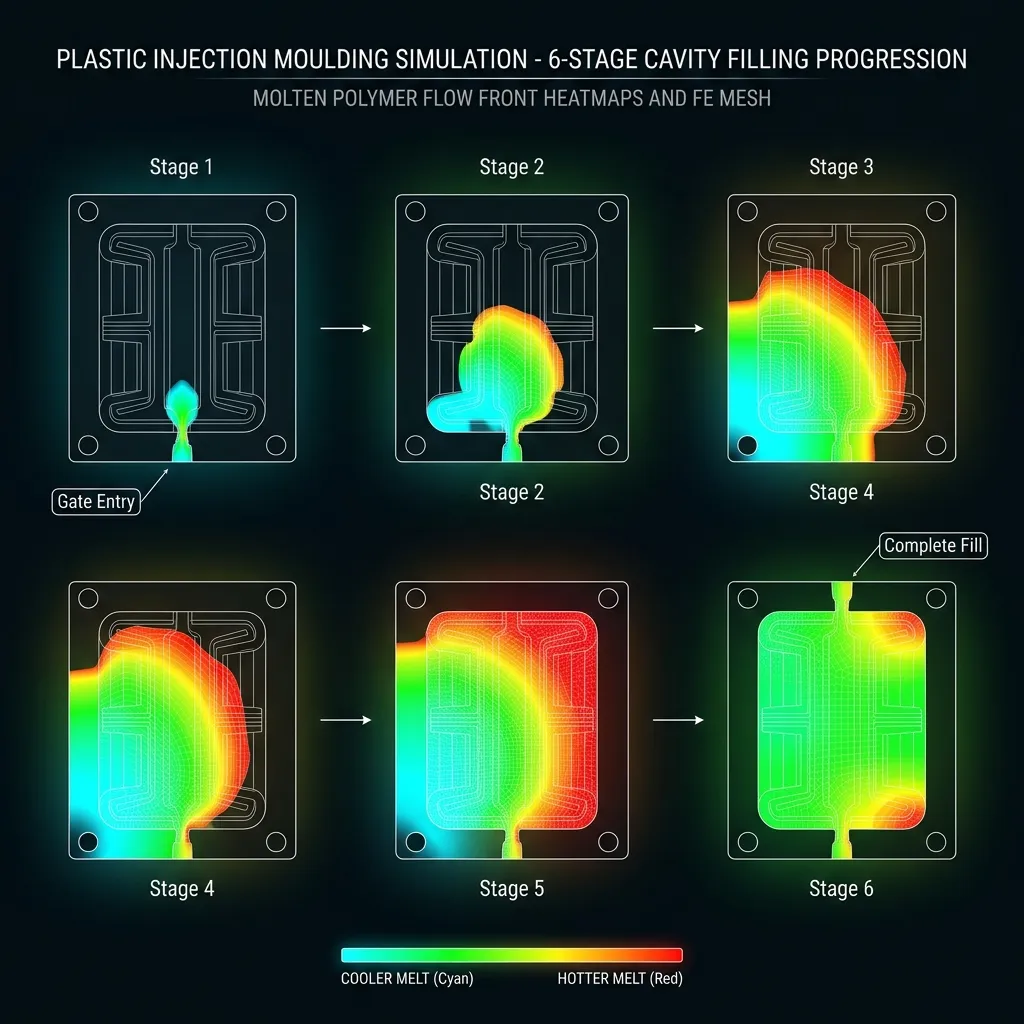
Digital Polymer Journey
What the filling simulation covers, step by step.
1. Gate Entry
Initial shear and injection pressure analysis.
2. Flow Front
Melt progression tracking.
3. Cavity Fill
Volumetric filling speed validation.
4. Weld Line
Knit line formation prediction.
5. Air Displacement
Venting layout optimization.
6. Complete Fill
Final pressure & V/P switchover.
Geometries Where
Simulation Matters Most
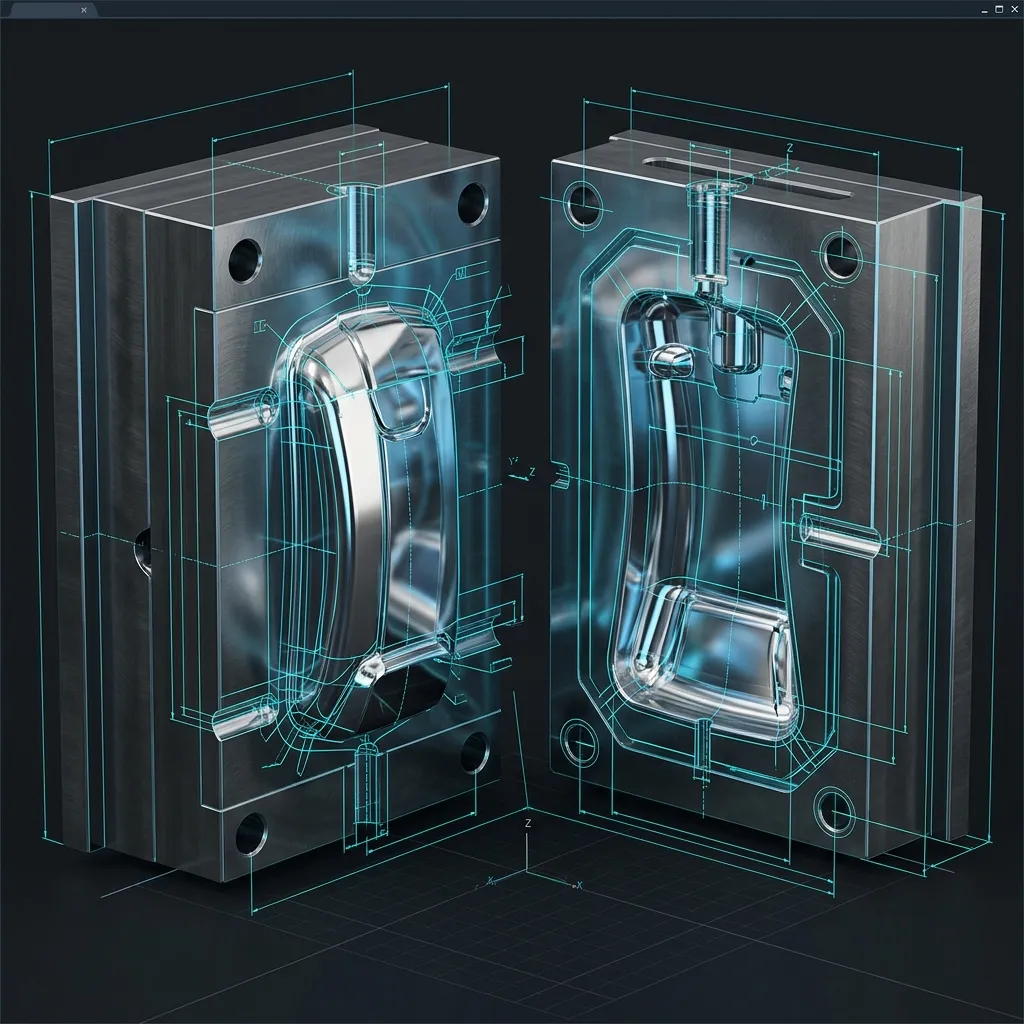
Thin Wall Components
Consumer electronics housings.

Long Flow Length Parts
Appliance enclosures and bumpers.
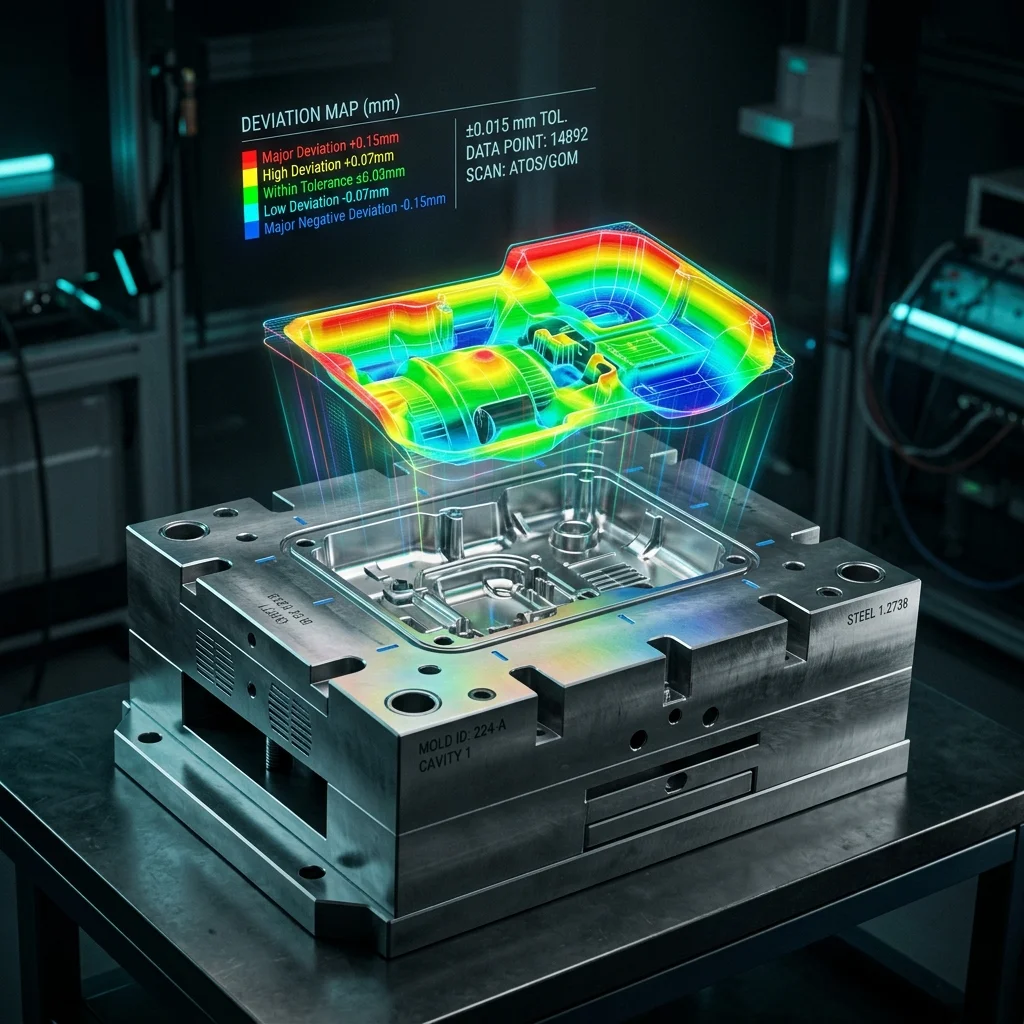
Multi-Gate Tools
Complex manifold systems.
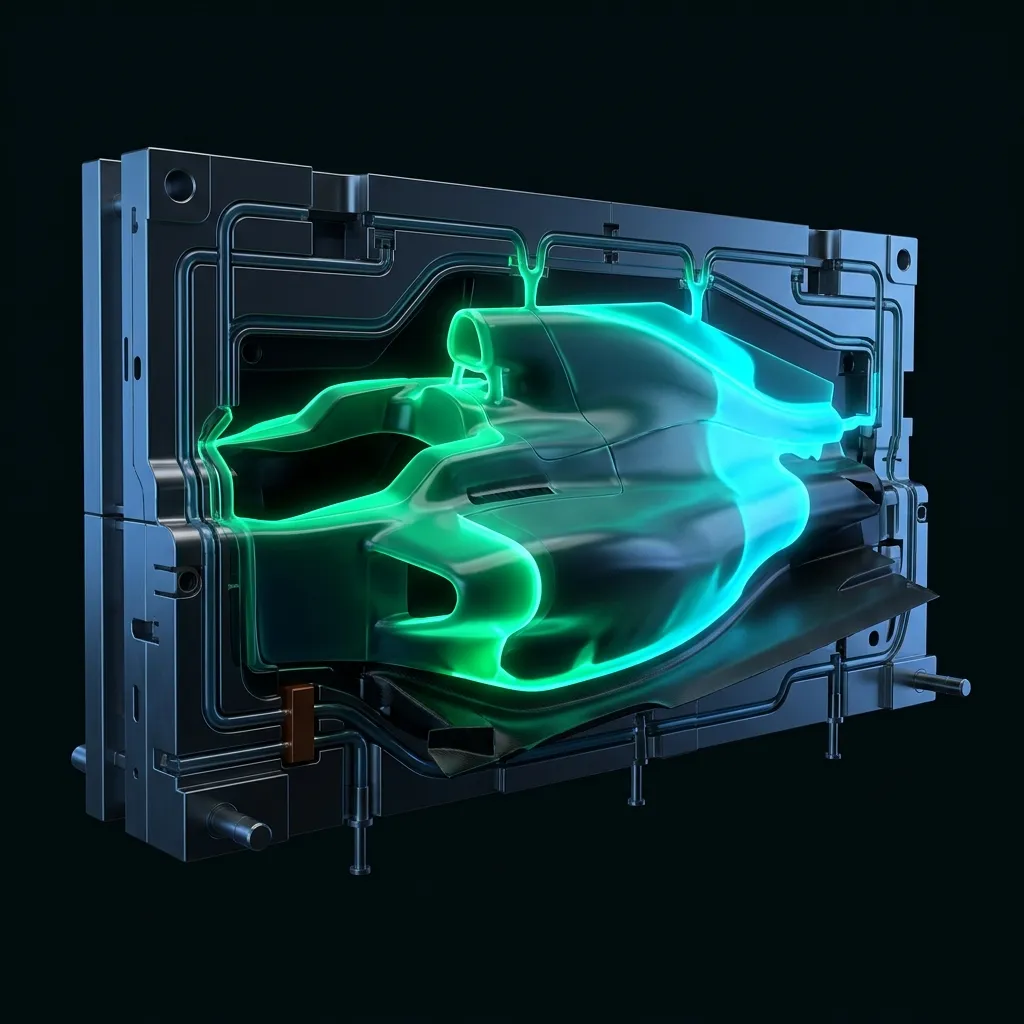
Rib-Dense Components
Structural brackets.
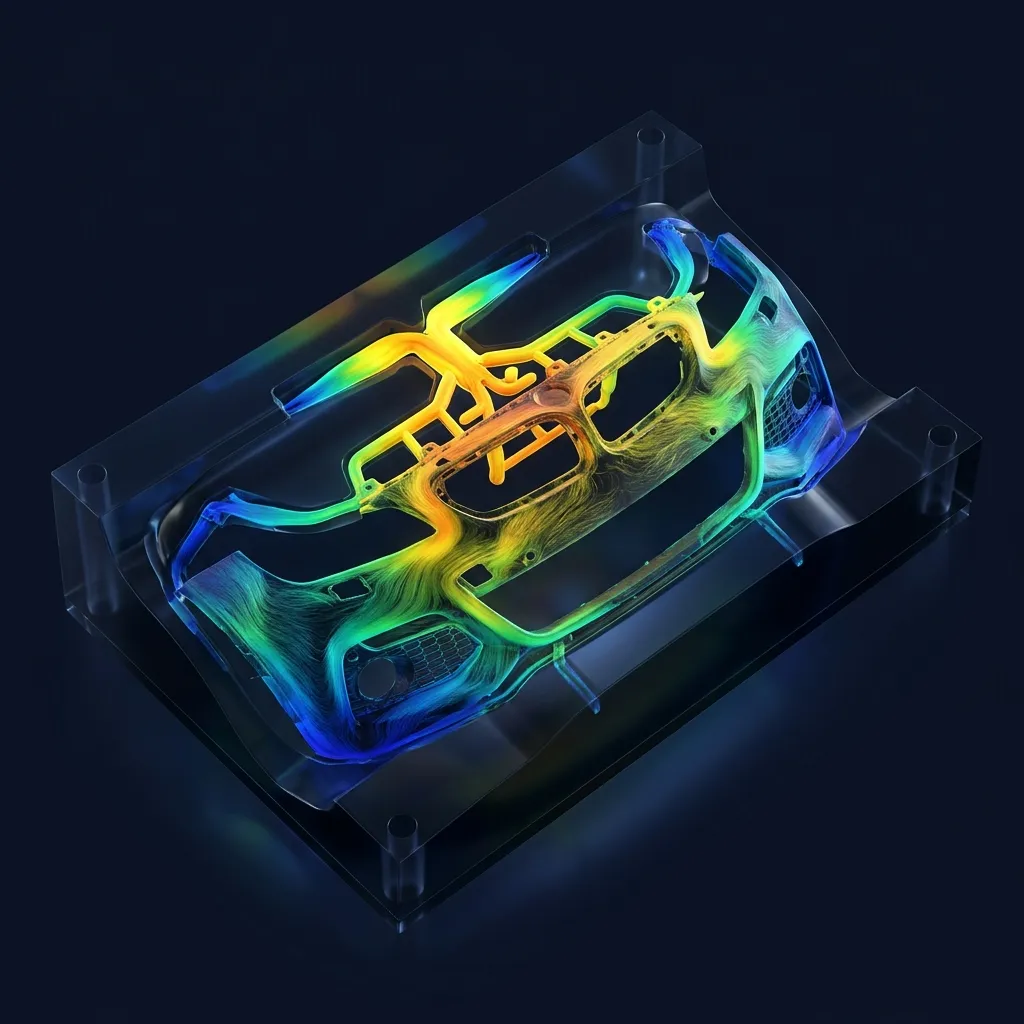
Automotive Plastic Parts
Dashboards and interior trims.
Medical Plastic Components
High-precision sterile devices.
Engineering Report Dashboard
Simulation Outputs & Deliverables